
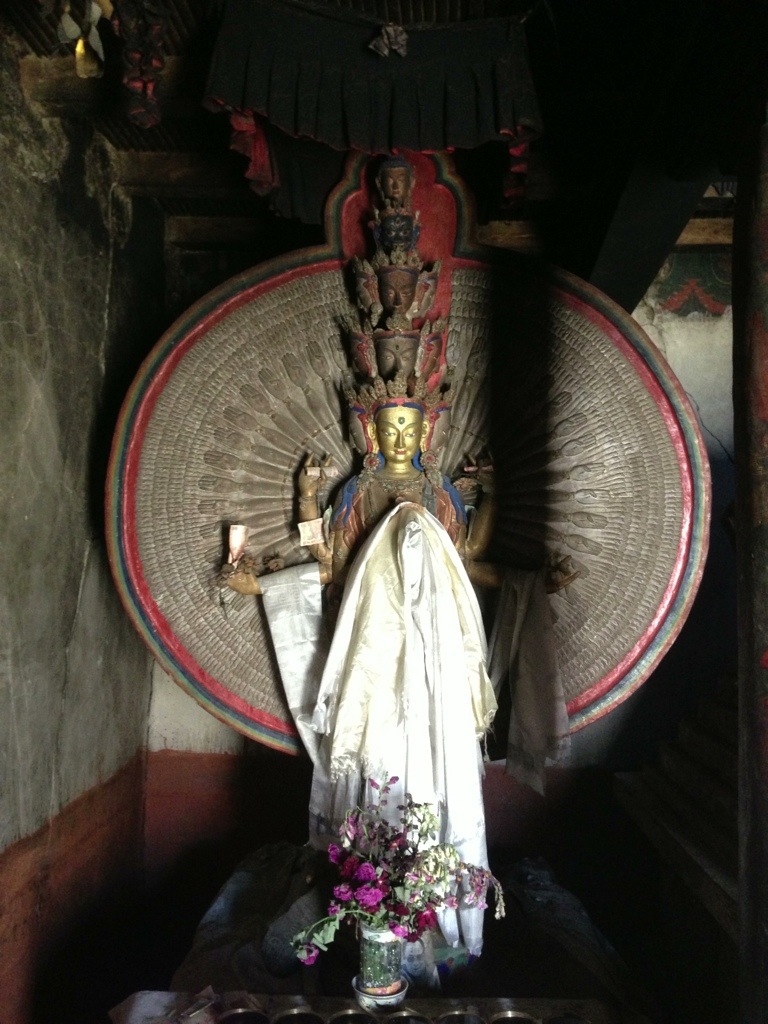


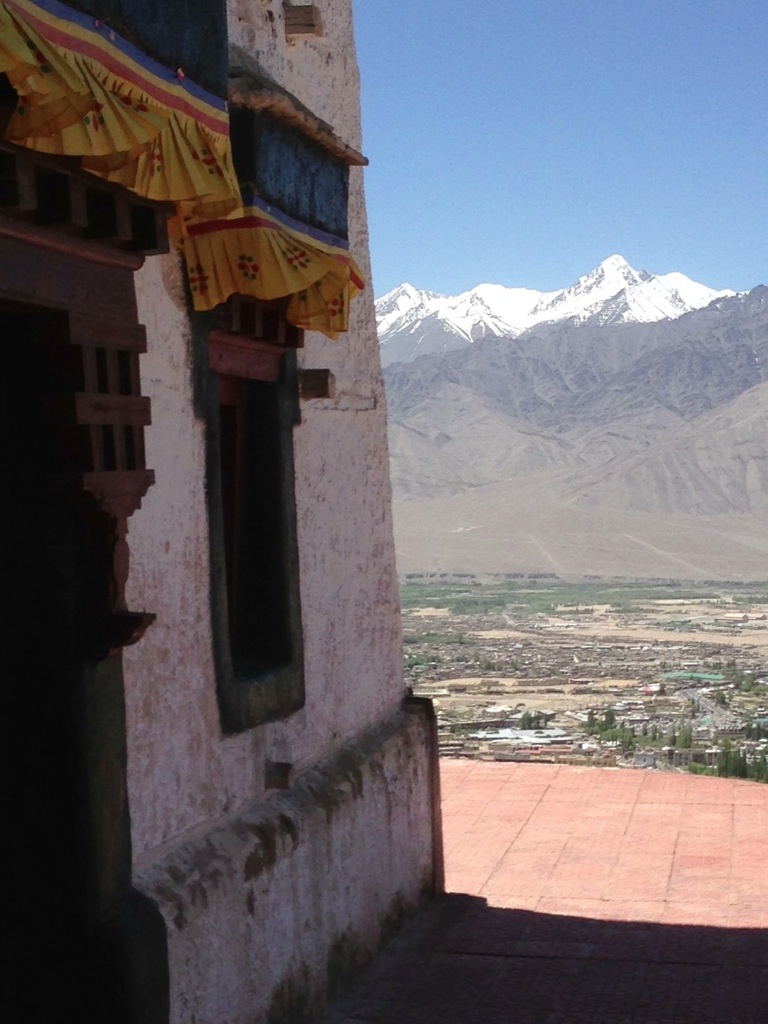

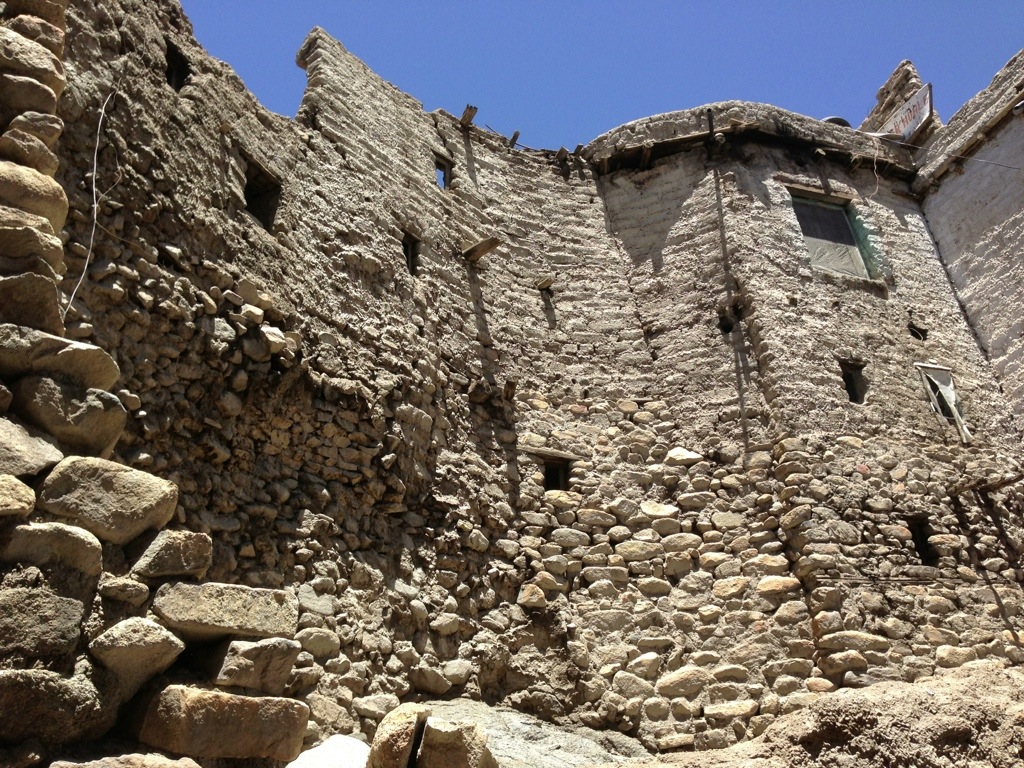
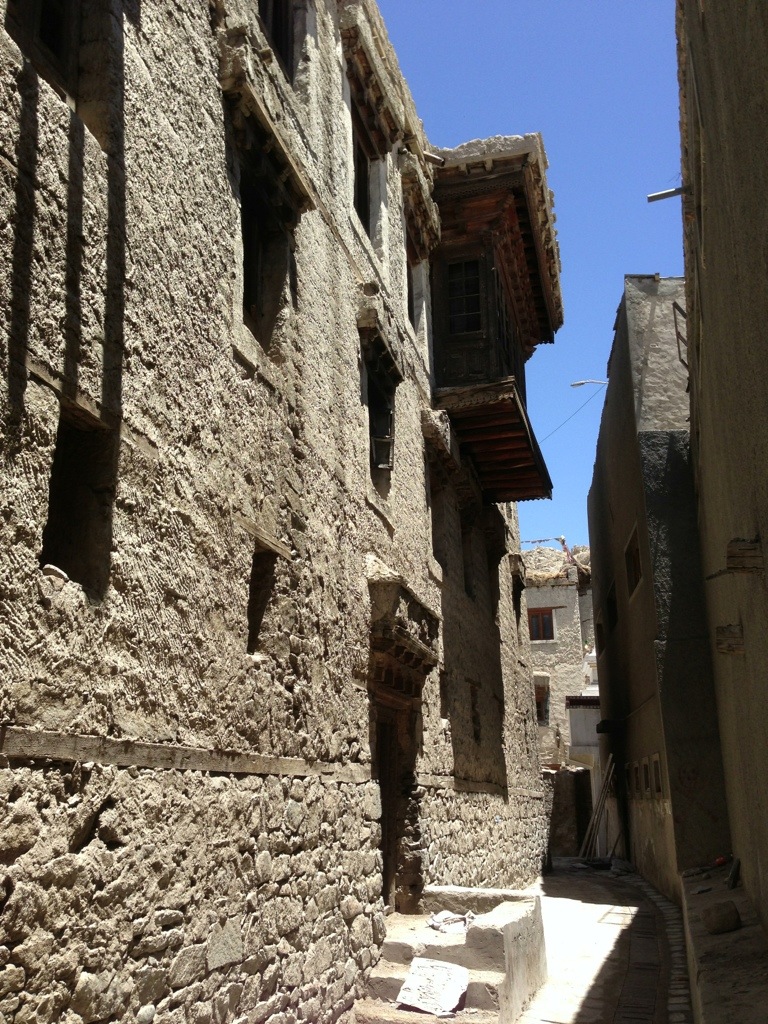


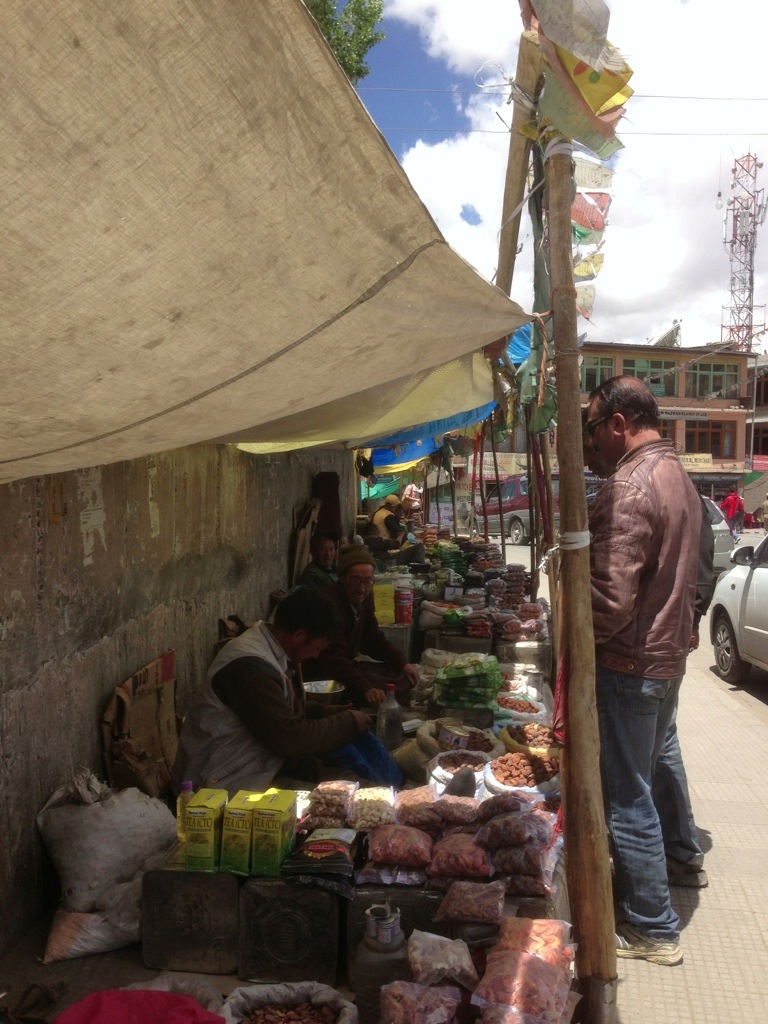
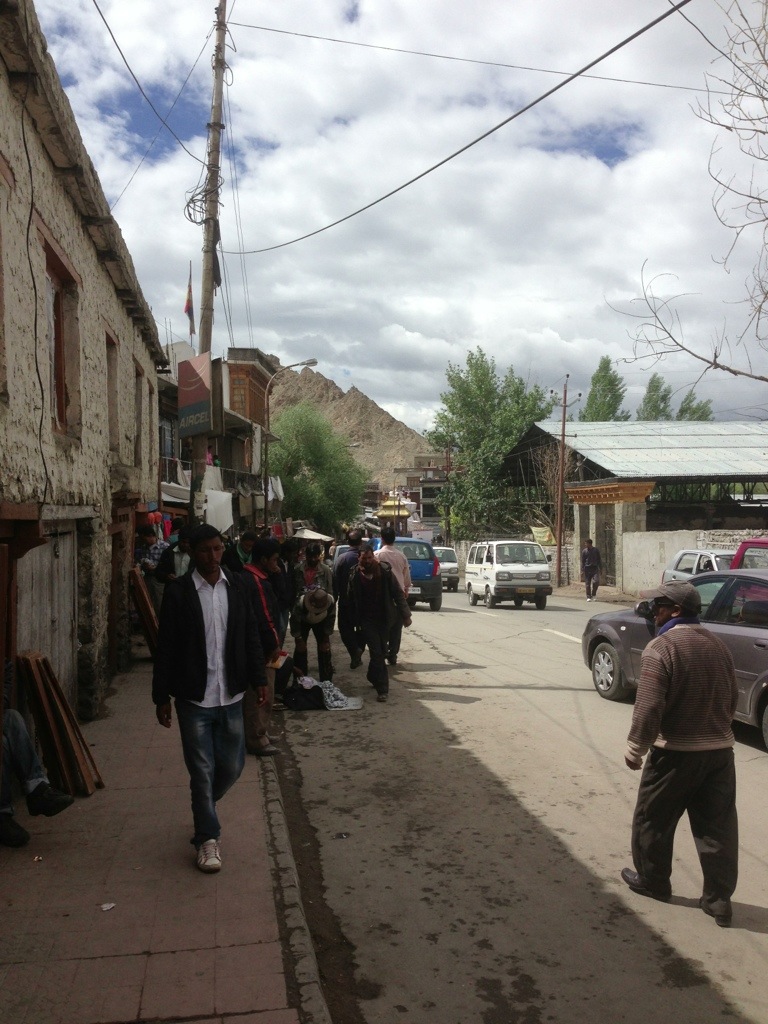
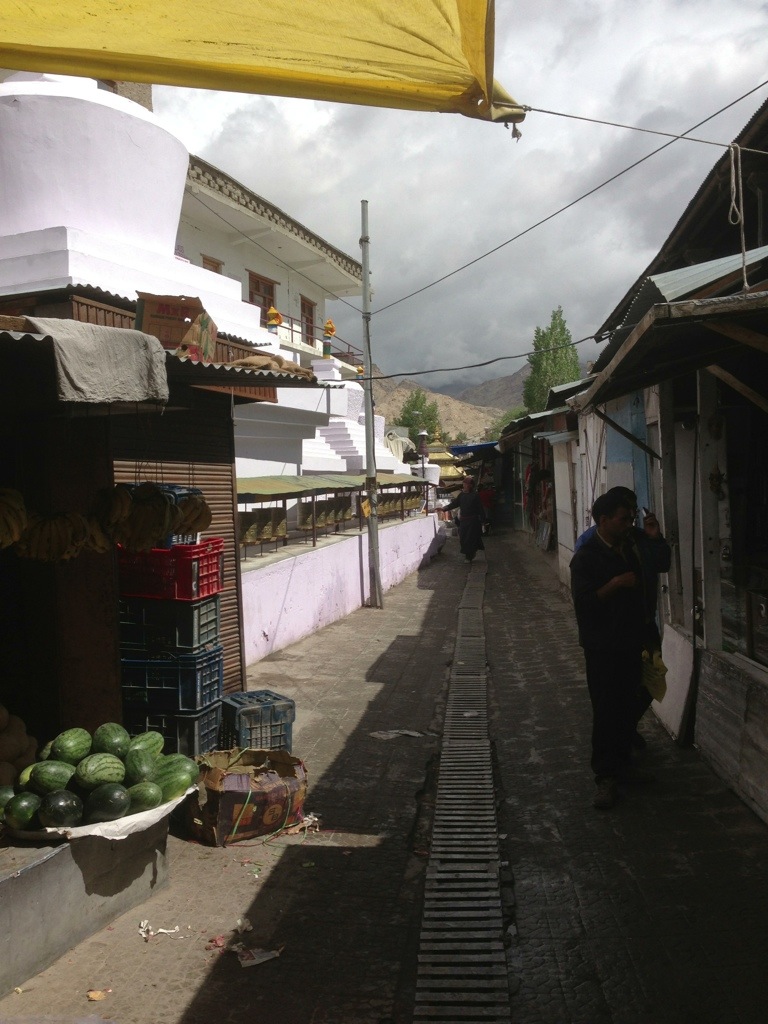

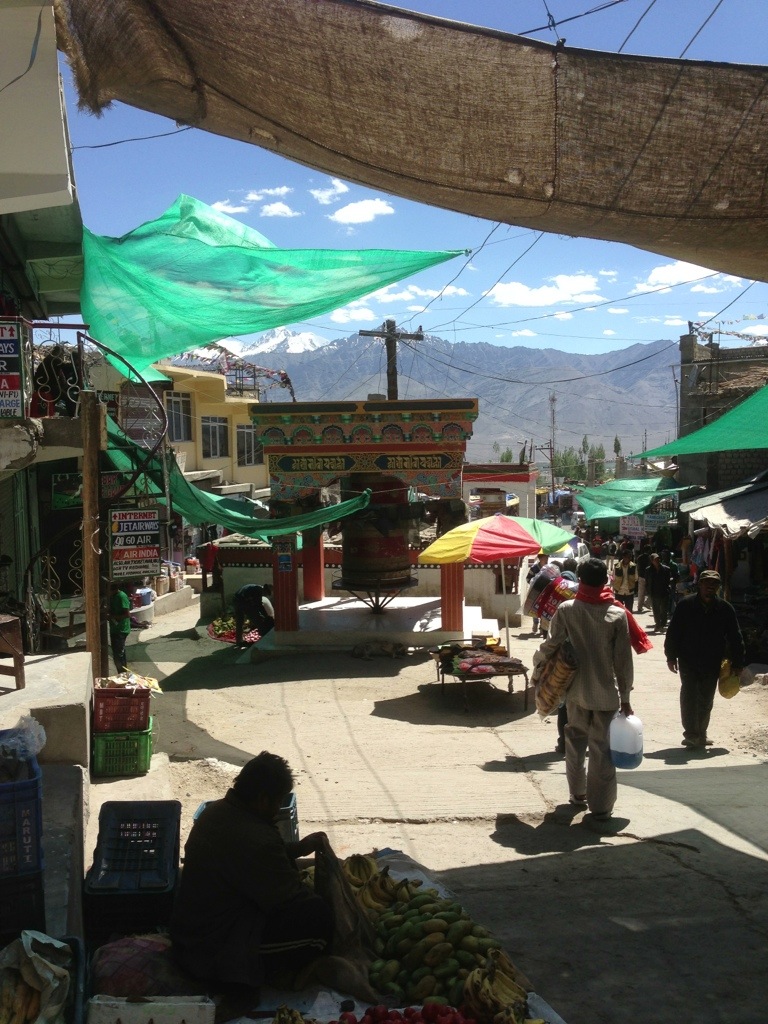


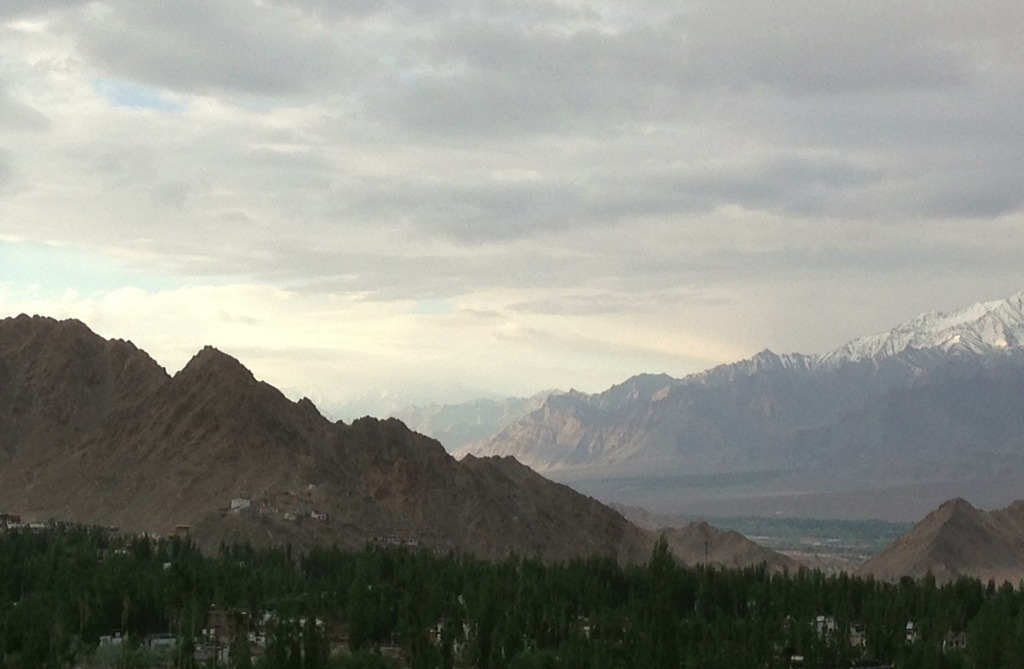
At over 3,500 metres Leh is a city in the sky. Rainfall is low and the air is dry. The desert atmosphere desiccates everything it touches. With so little ground water the limited seasonal output from the melting snow puts pressure on the population to conserve every drop of water. The increasing influx of visitors exacerbates the problem. Leh has become two cities. During the Summer when the mountain passes are open it is filled with tourists and seasonal workers. As the cold weather closes in Leh returns to its Ladakhi roots. The airport provides a vital supply link. In some respects Leh’s isolation helps to conserve its cultural identity in the face of globalisation.
My own impressions were of a Kashmiri city in the same respects as Srinagar. The mosque has a central position and early each morning Kashmiris stand on the main street waiting to be picked for work. Shops, restaurants and hotels employ a host of seasonal staff from Northern India. The fascination with Leh is that it steadfastly remains a bastion of Tibetan Buddhism in the face of such potential dilution. Ladakhis are a proud people and maintain a unique identity in the face of modern pressures. Leh is filled with symbols of that identity. Much like Kathmandu, Leh has buddhist stupas and prayer wheels at every turn. The city is overlooked by Buddhist Gompas in each direction. Ladakhi families continue to farm the land within the city boundaries as they have done for centuries.
I had expected to find a cold wasteland and isolated city. But Leh is a vibrant welcoming place that enjoys good albeit dry Summers. I stayed with a traditional Ladakhi family close to the Shanti ‘peace’ stupa bordering the Changspa district to the North of the city. Early each morning the elderly owner of the ‘Lhari’ home stay would circle and purify the buildings with a smoking brazier of burning herbs. The surrounding gardens were filled with a huge variety of vegetables. Neighbours tilled their soil using yaks and planted their own crops. Visitors like myself provided an additional income but local families continued to support themselves in the same manner as they had done for generations. The isolation and independent lifestyle of Leh’s Ladakhis families is magnificent.
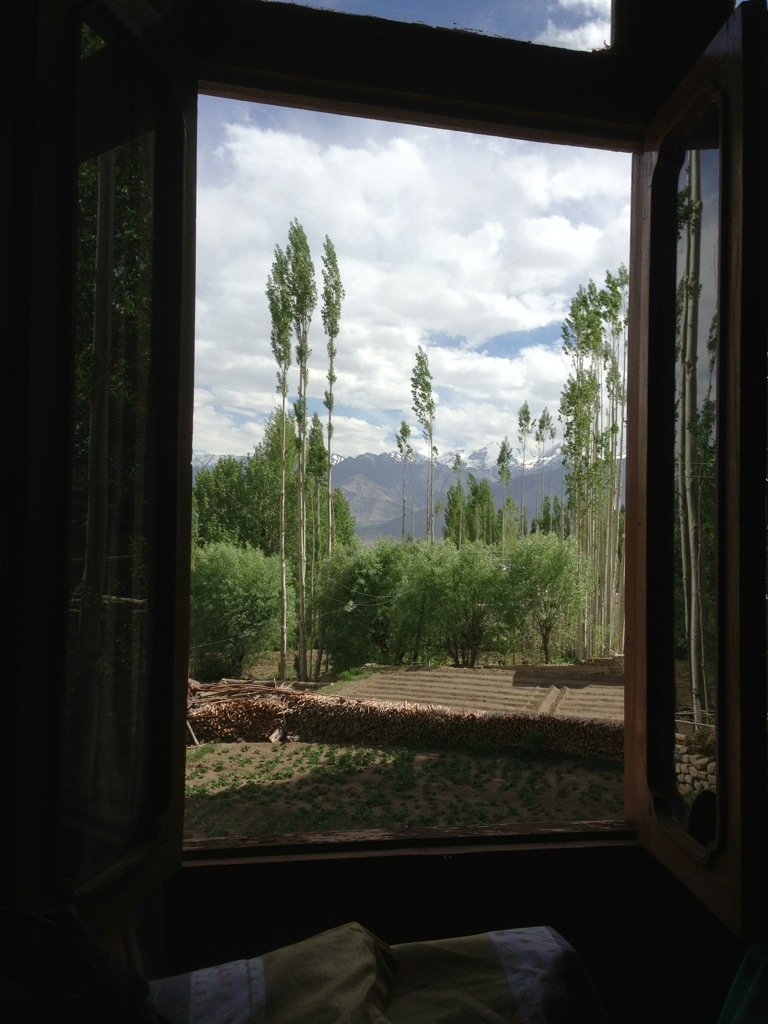
My upper floor room overlooked the vegetable garden and the mountain range to the South. The Shanti Stupa, built by Japanese Buddhists in the 1980s, stood high on a hill nearby. Given that I needed to acclimatise to the higher altitudes and prepare for the long cycle ride back to Manali I climbed up to it before sunrise each day. Occasionally I would meet a 16 year old Ladakhi athlete that would run to the top. He proudly told me how he had recently won the 100 and 800 metre races at an athletic meeting in Srinagar. Watching him quickly run and ascend the steps to the Stupa at an altitude of over 3,500 metres altitude it was no surprise!


During my stay I walked extensively across the city and circled it on my bike. A river cuts through the centre and beautiful old buildings lay on its banks. During recent floods residents fled up to the Shanti stupa until the waters subsided and the river returned to normal.


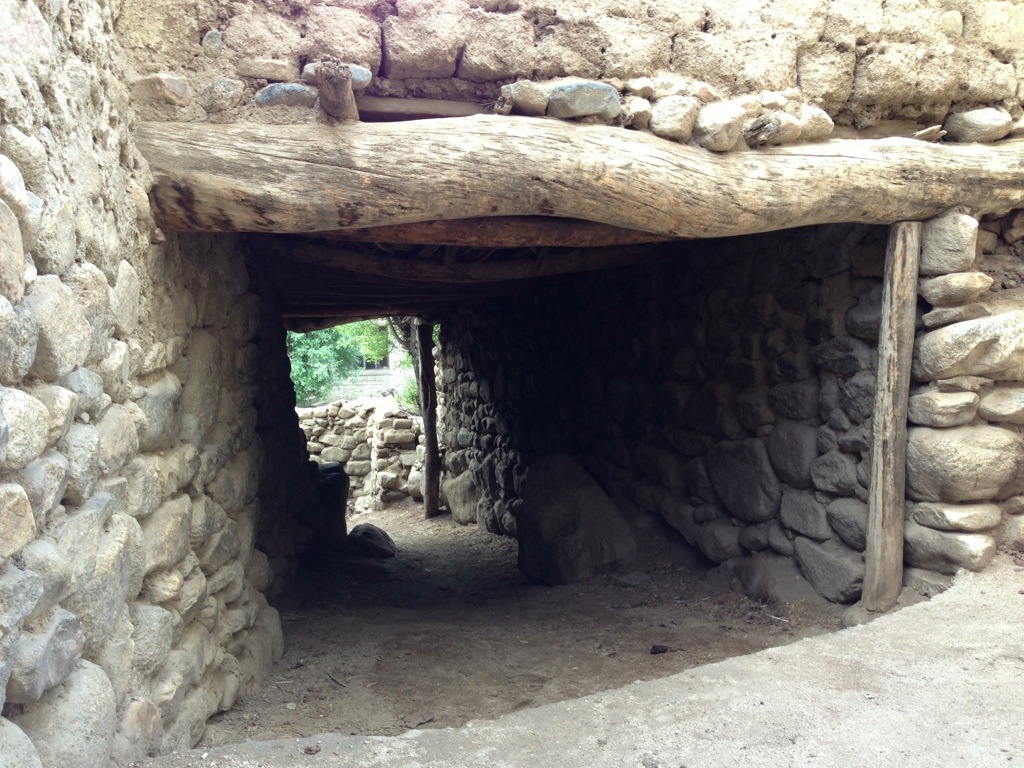


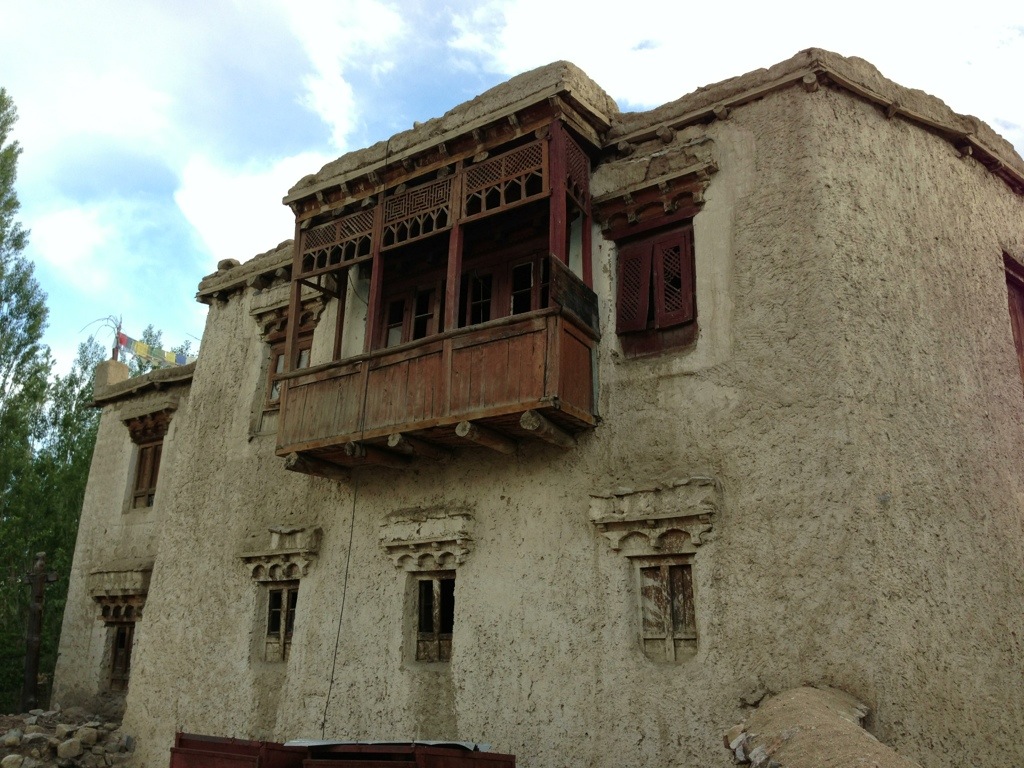
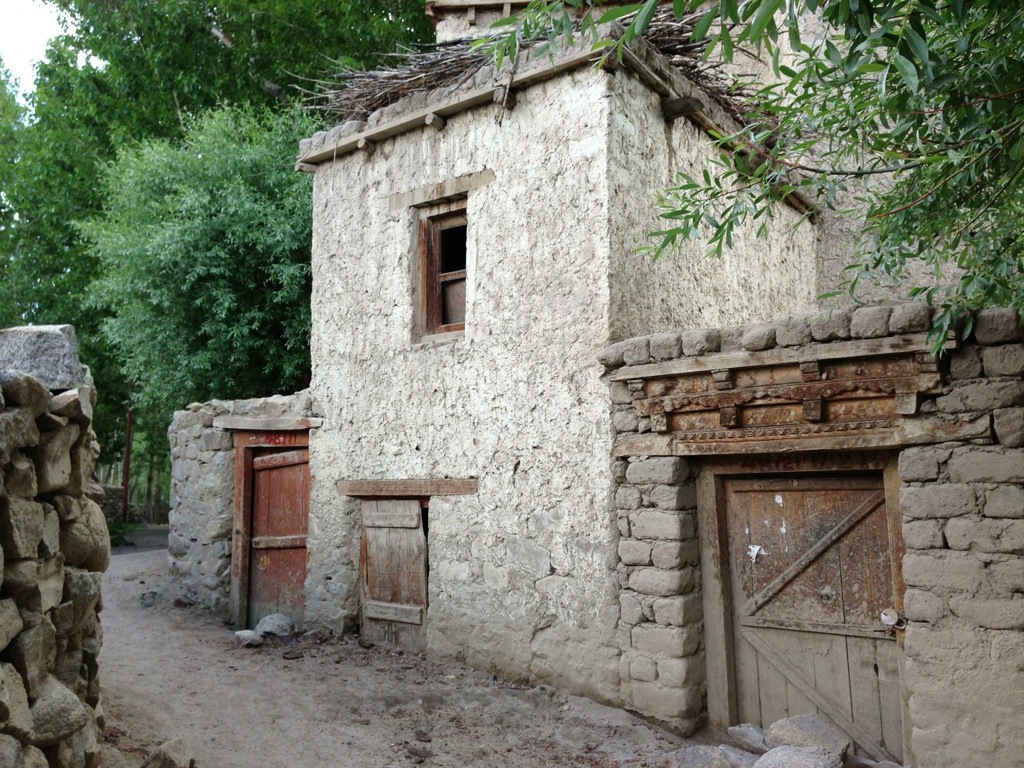
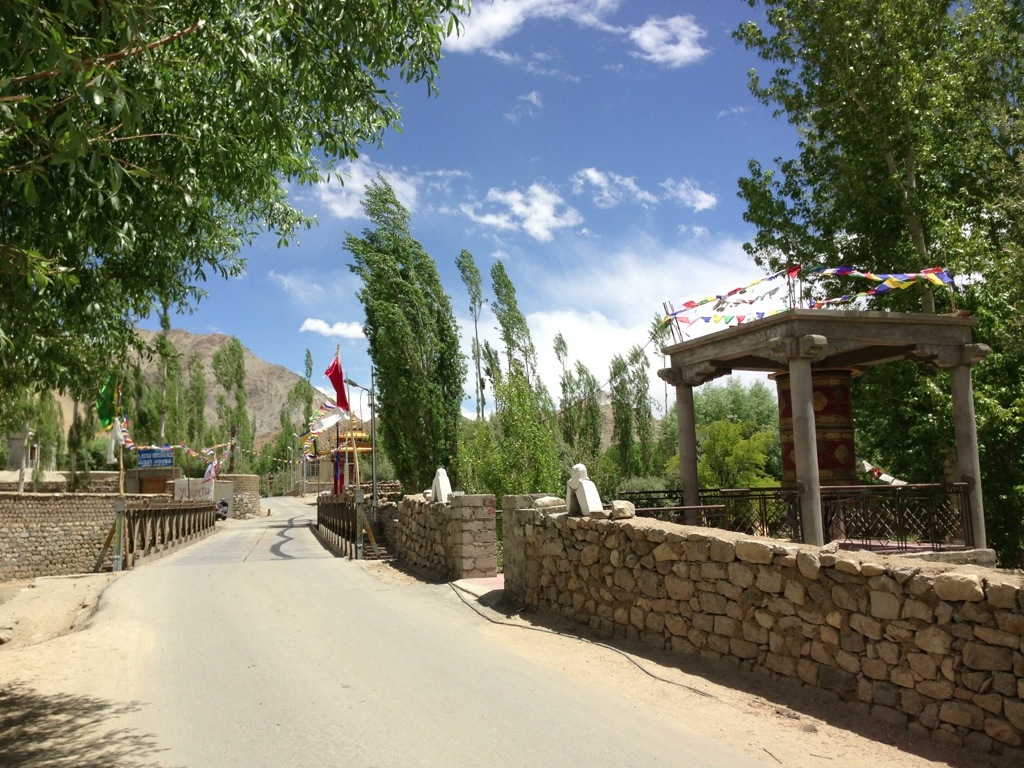
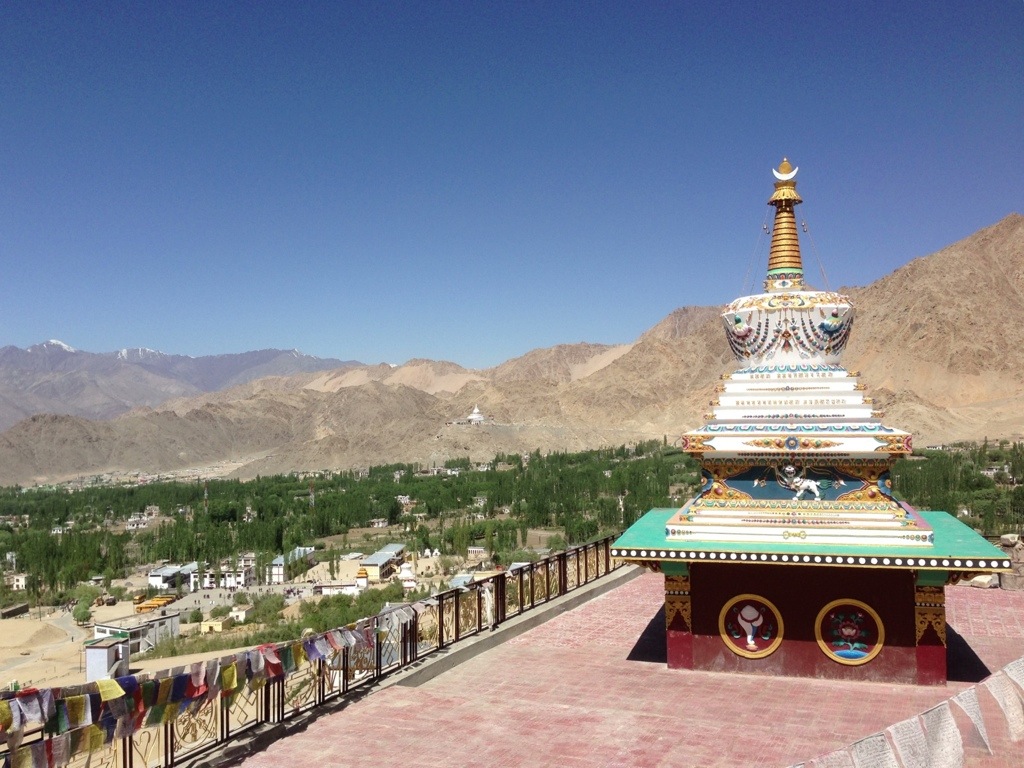
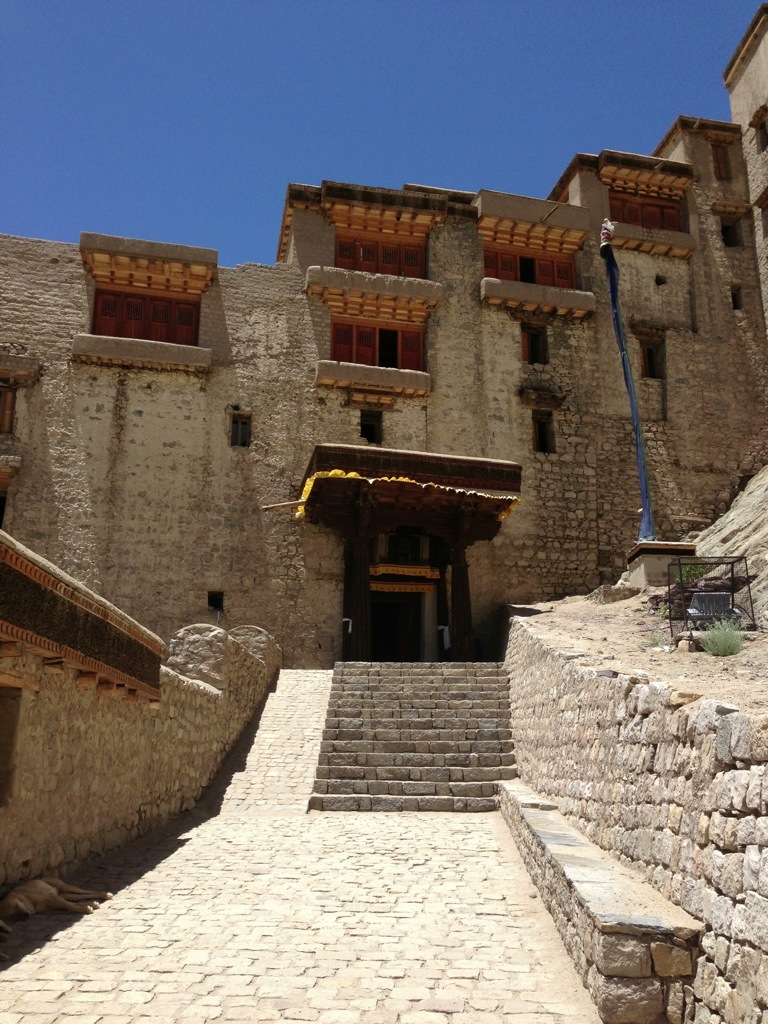
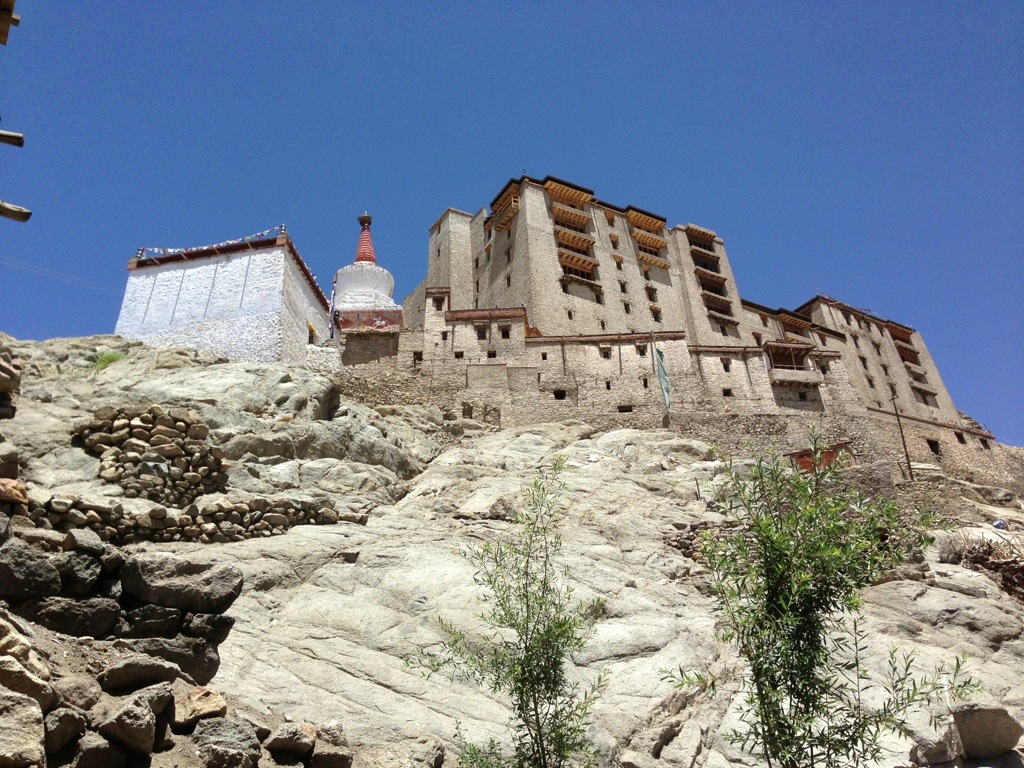
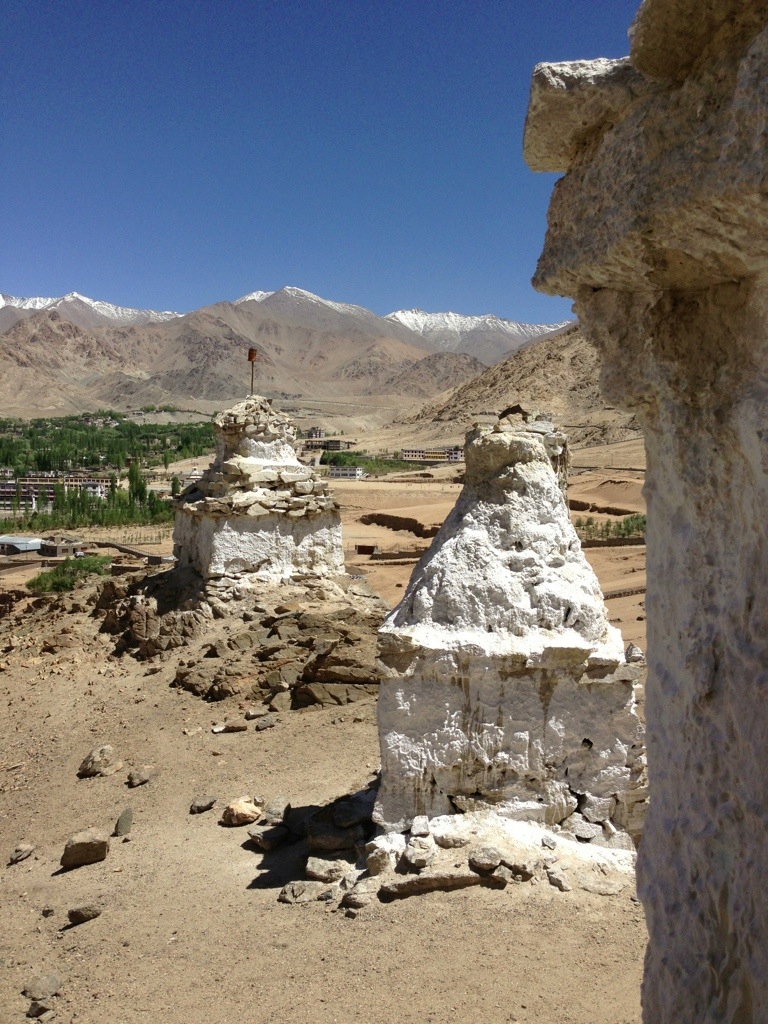
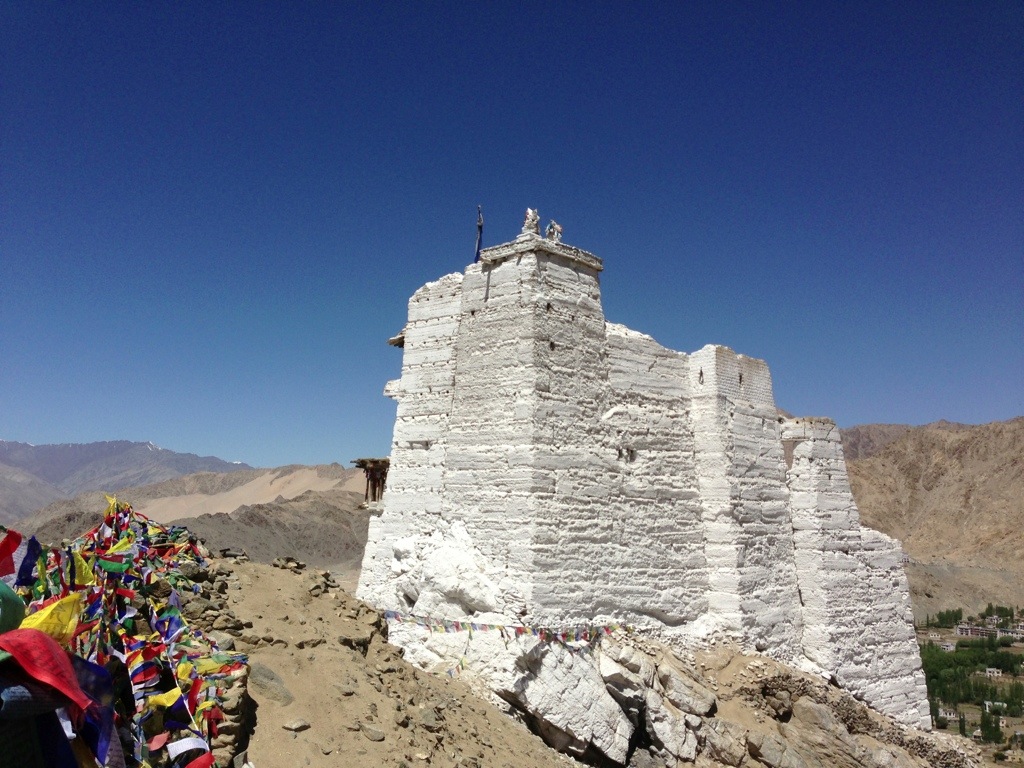
Leh’s Royal Palace dominates the skyline above the Jama Majid mosque on the Main Bazaar Road. Perched above is the Tsemo Fort, Gonkang and Namgyol Gompas. I climbed up in the heat past crumbling chortens to the fort and walked down past the palace into the maze of passageways of the old town.



It took around twenty hours to reach Leh by road. This included a few stops for refreshment. It was an incredible road trip which tested the vehicle and the skills of the driver.
I had booked my place early and had snagged the front seat. I watched the road carefully and considered the degree of difficulty I would experience cycling back. The road conditions were seriously bad and was amazed that a minibus could cope with the flooded rocky roads. All kudos to the driver who had been doing the route on a regular basis for over 6 years and knew it like the back of his hand. I enjoyed the luxury of being driven but felt a little guilty having scotched my ‘green’ copybook.
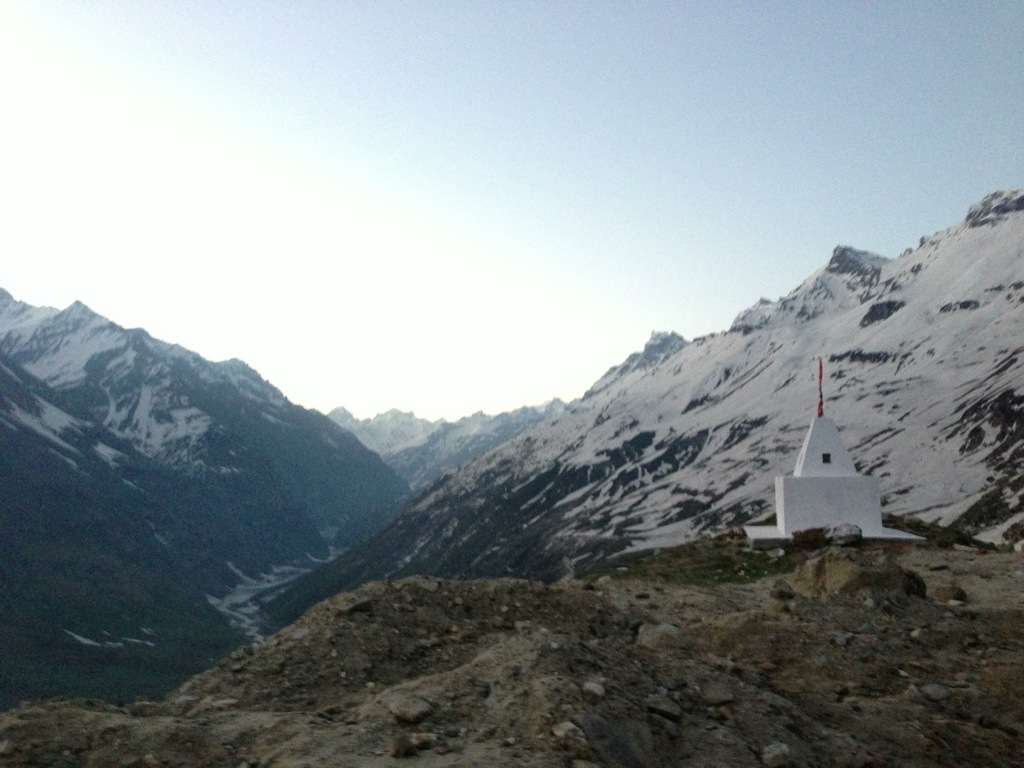
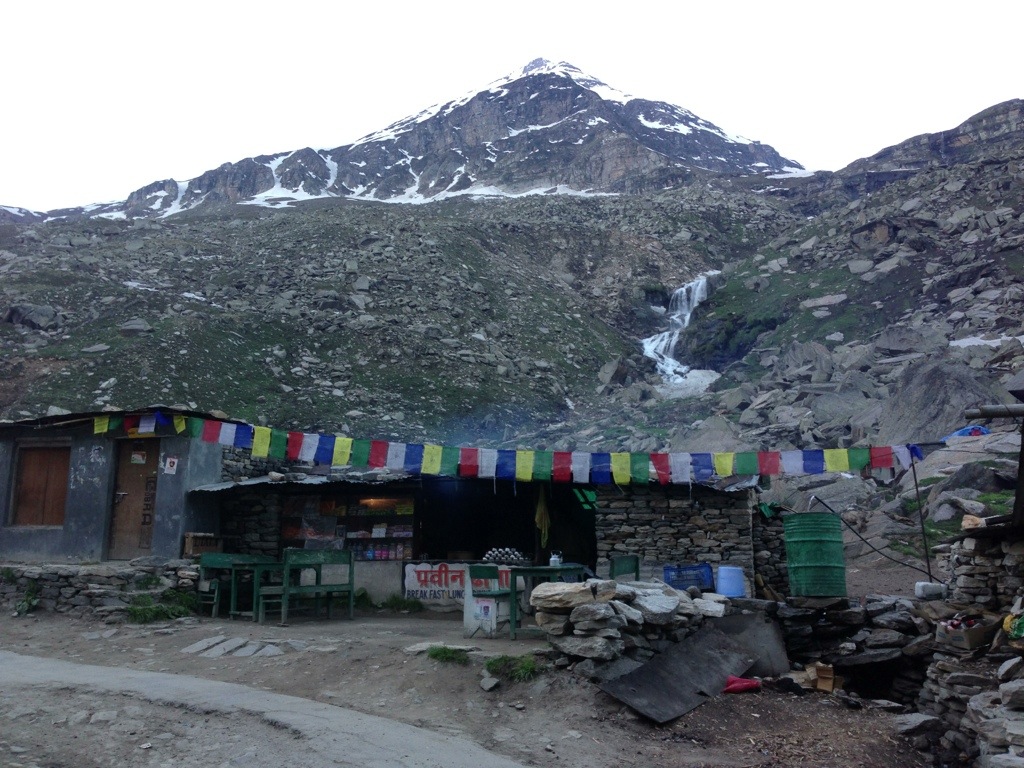


We were delayed at one point where the road had given way to fast moving water and mud. Vehicles were queued and a fair few people, in typical Indian fashion, stood and watched a lorry with its wheels spinning and sliding in the mud.
With a little coordinated effort there was a way for us to get through. By getting the passengers off, putting rocks under the rear wheels and enlisting the help of other drivers to push we were able to get past. Using this method we managed to get three minibuses through.
I was amused at the Israeli tourists that finally conceded to remove themselves off one minibus to lighten its load. They had summer sandals and flip-flops. Some looked like they were dressed as Rajasthani herdsmen with baggy trousers and matching hats. They did their best to avoid getting mud on their ethnic attire and gingerly tiptoed ahead past the problem. I think they would have been horrified at the thought of actually helping to push a vehicle through mud.

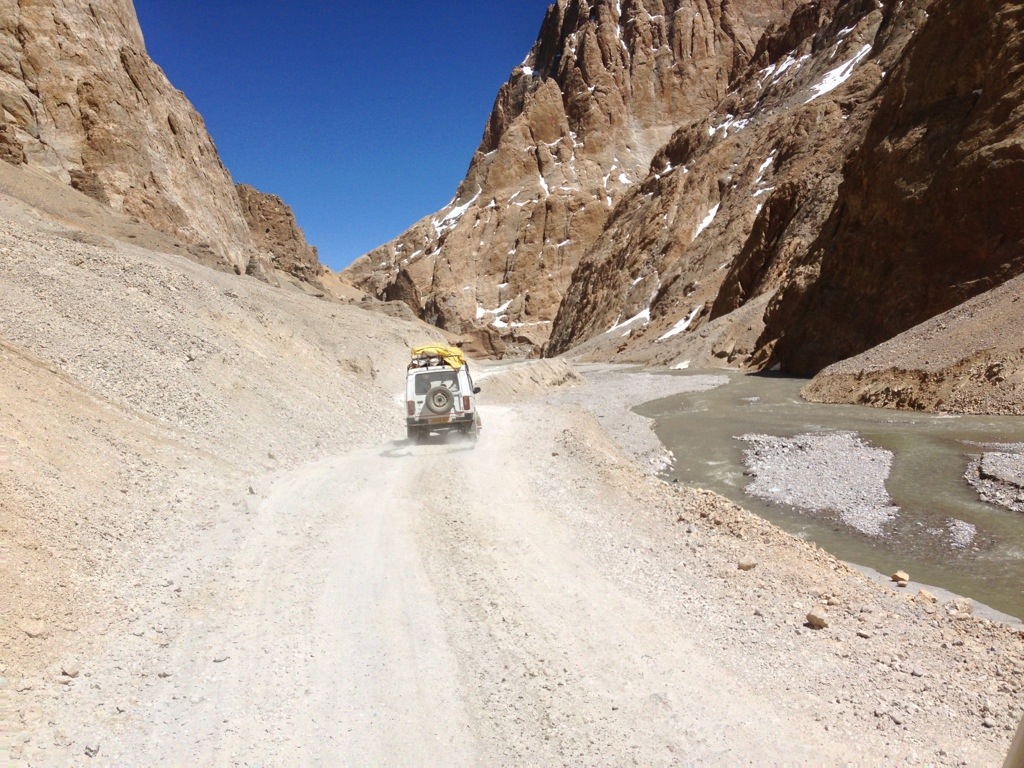


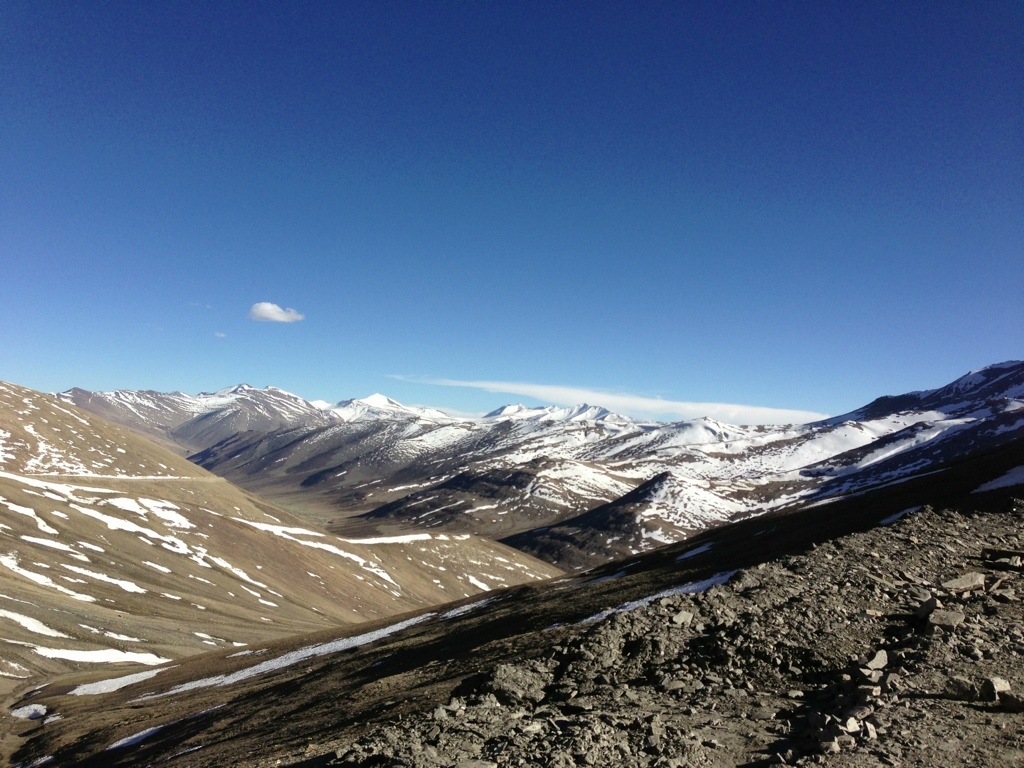

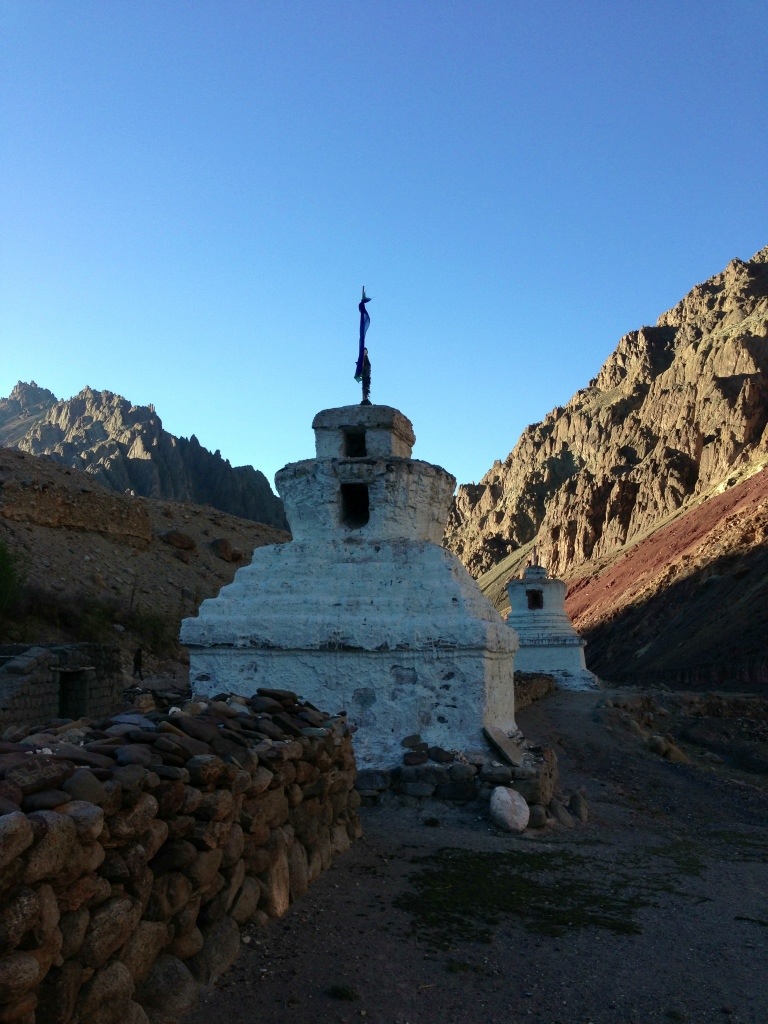
Having backtracked to a village to drop off an elderly lady we arrived in Leh in darkness. It took a little while to reorganise my luggage around my cycle panniers. Somewhat cold, tired and disorientated I struggled to make my way up a steep hill away from the bus station. It was pitch black. Eventually I found my way to a dirty looking room at the Indus hotel and gratefully fell in to a coma.
 Initial impressions of Manali are disappointing. It is, naturally, a huge draw for tourists seeking refuge from the heat of the Ganges plain and beyond. Manali has a seaside town atmosphere and is heaving with people. The main drag is a pedestrianised area awash with shops, restaurants and travel centres. However the surrounding scenery is nothing short of spectacular. The Beas river has carved through the rock and helped created a valley that extends over 80km South to the Pandoh Dam reservoir. At Manali it is fast flowing and loud. Himalayan ranges rise up in every direction and stand proud above alpine forests. To the north are the formidable mountain passes which lead to Ladakh, Pakistan and ‘Tibetan’ China.
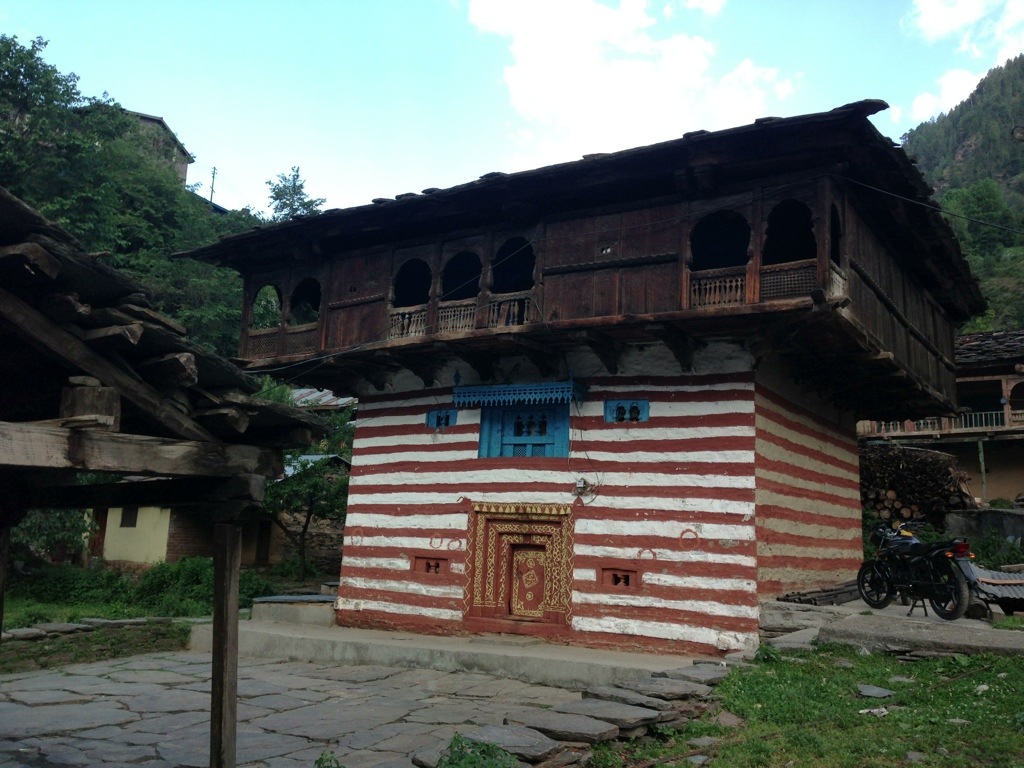
I had the address of a hostel in old Manali. The road winds up past a pine forest, down over a river and then up once again towards the old town. The original village is very attractive with distinctively built wooden buildings.
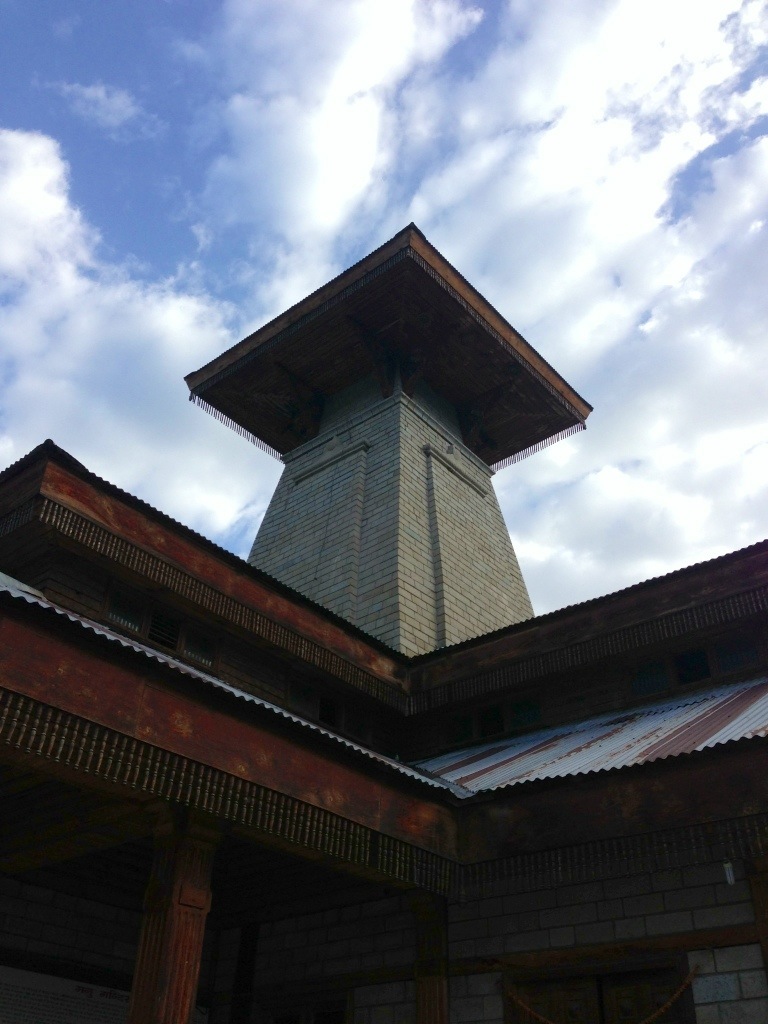
The newly replaced Manu temple represents the story of how the ‘law maker’ Manu, a little like the biblical Noah, arrived here following a great flood.

On the opposite bank of the Beas lies the village of Vashist which boasts of hot water springs for bathing. Aside from the usual tourist shops, hotels and restaurants Vashist has developed a reputation for being a destination for ‘stoner’ Western tourists with a cafe culture to match. It also has a large number of motorcycle hire companies. Row upon row of Royal Enfields gleam brightly alongside the road leading up to the village.

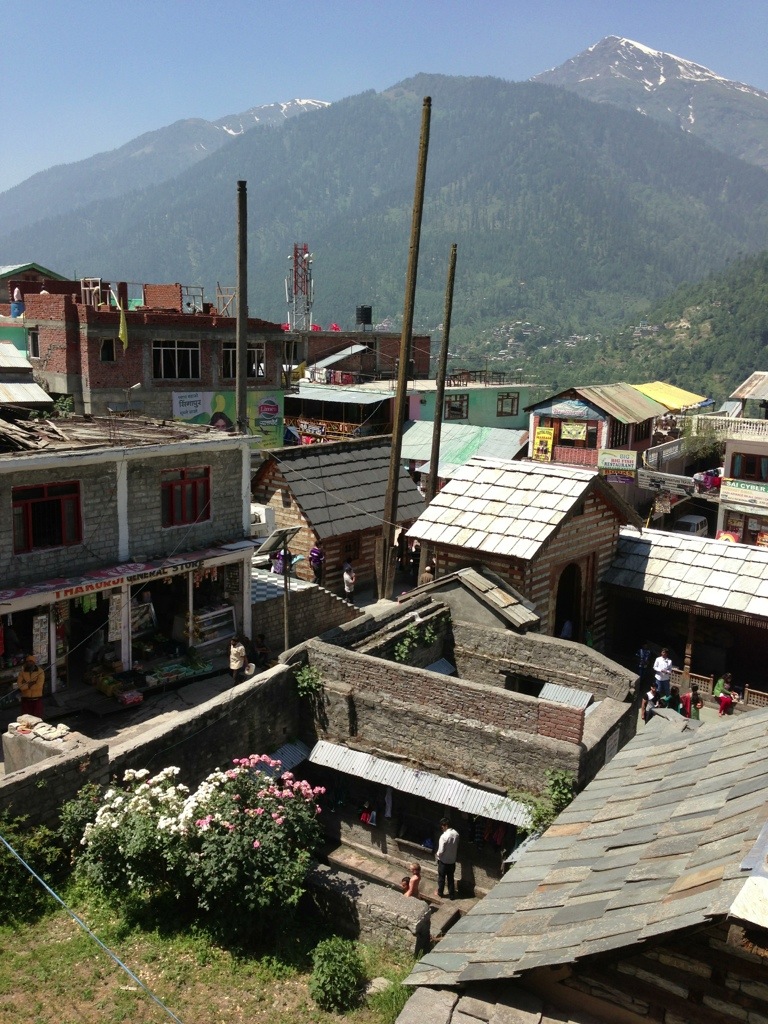
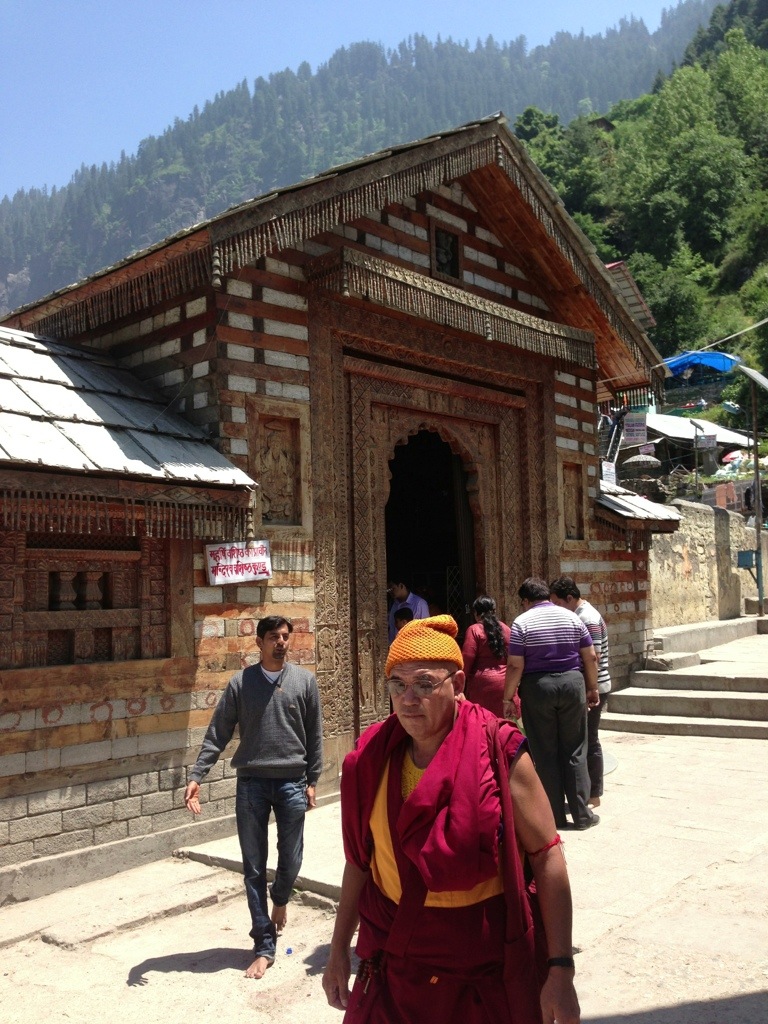
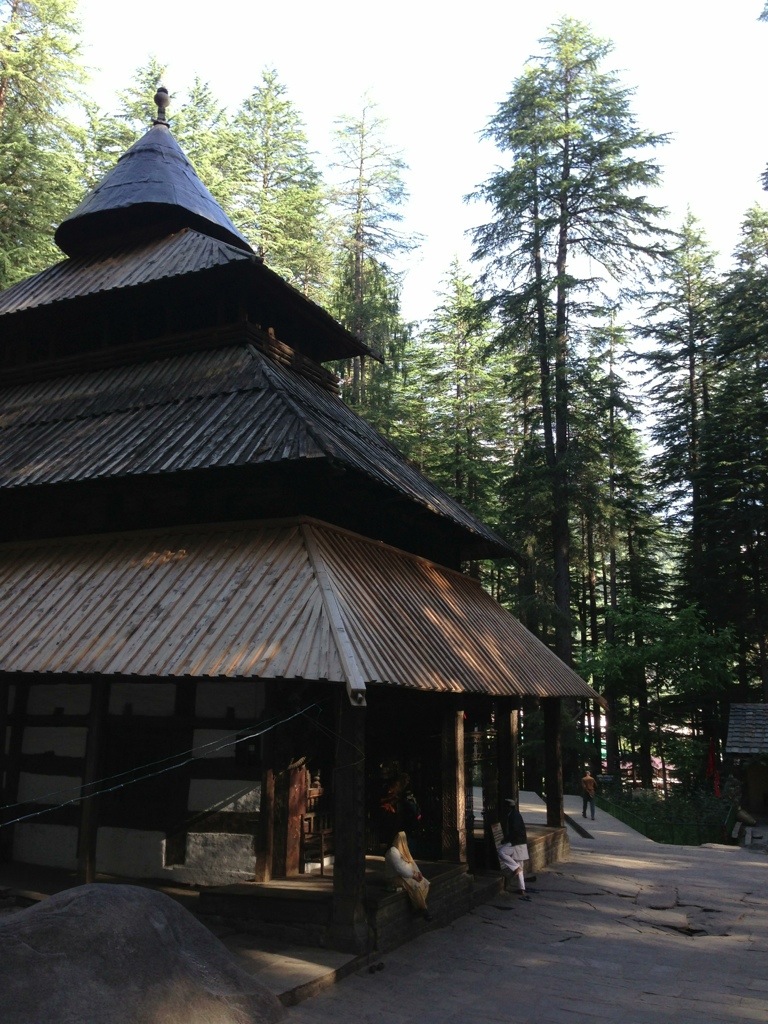
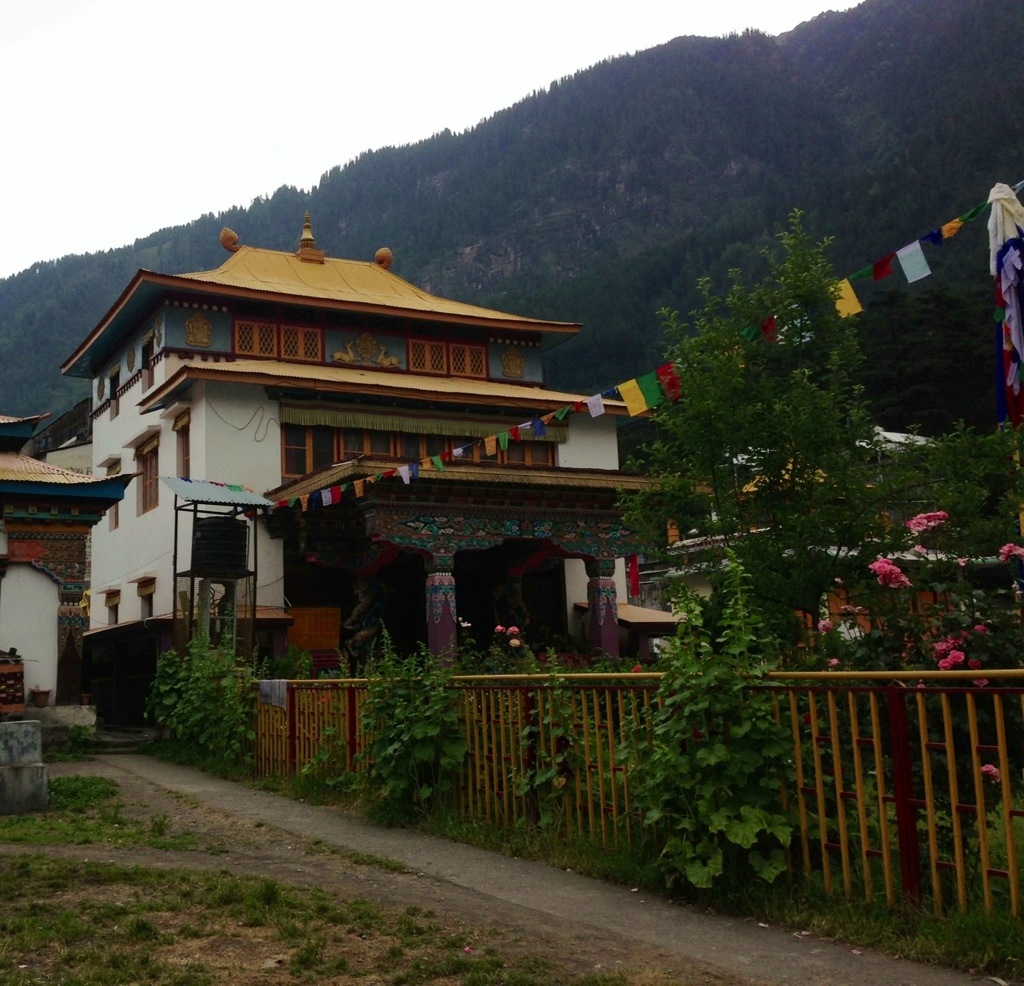
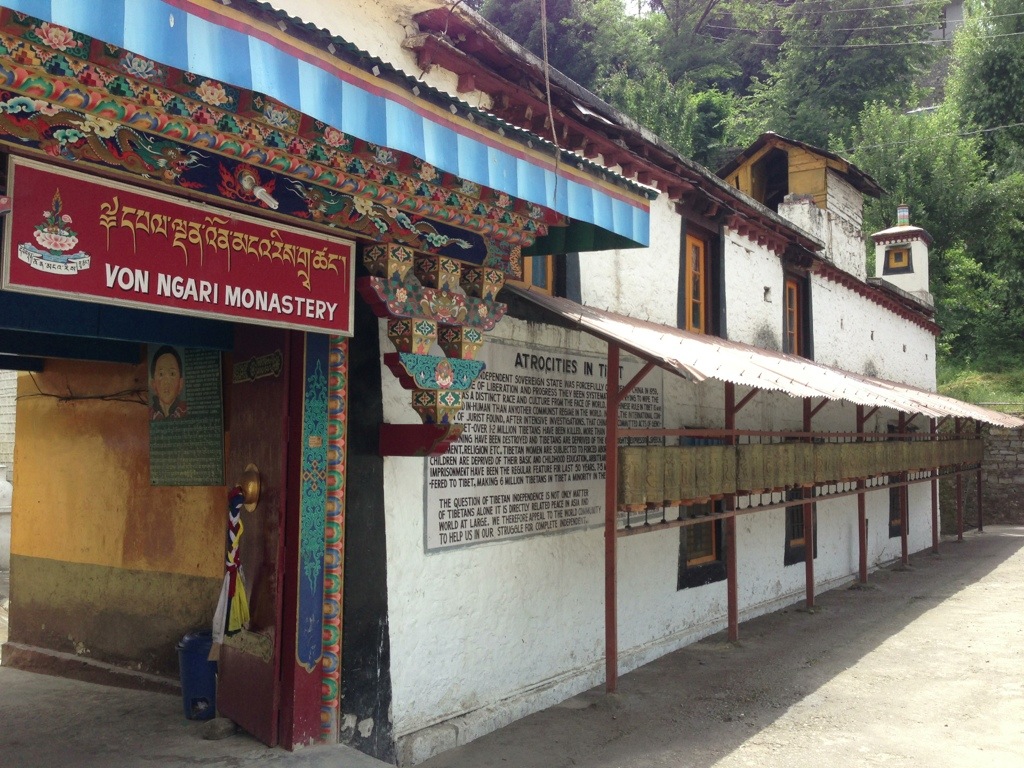
New Manali and the commercial centre sprawls along the West Bank of the river Beas. It mixes working class suburbs with a Tibetan community, Buddhist monastery and temple. It is separated from the old town by ancient forests. The ‘nature walk’ is particularly pleasant and in the hill forests above is the Hidimba Devi temple containing a natural cave shrine. 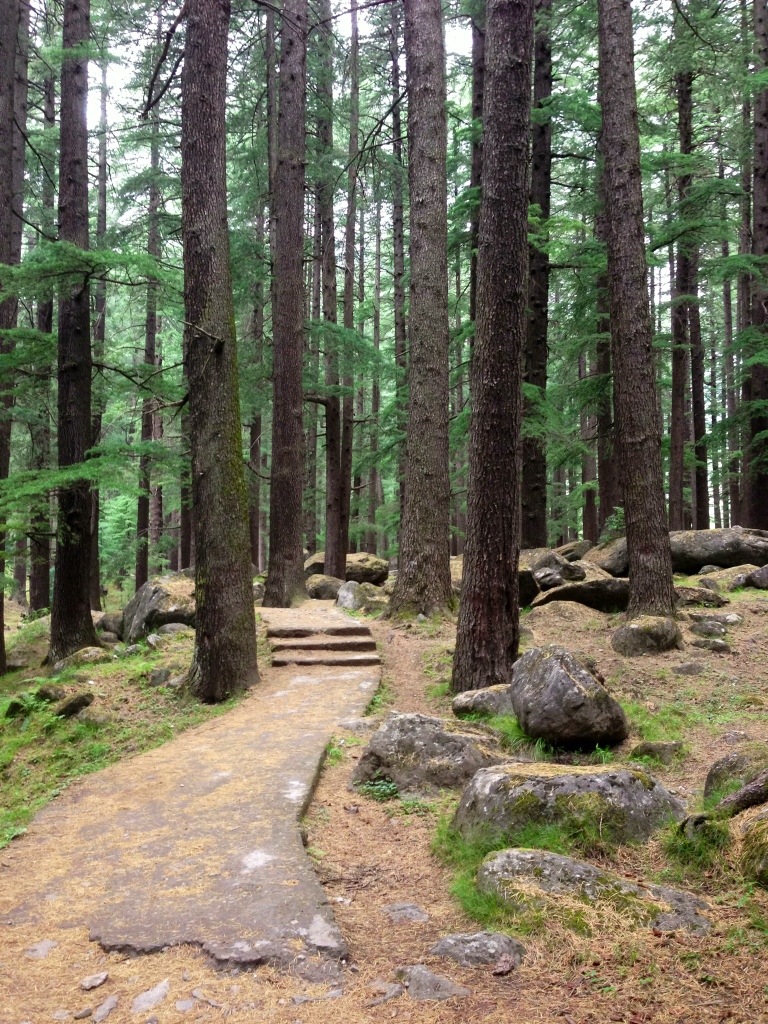




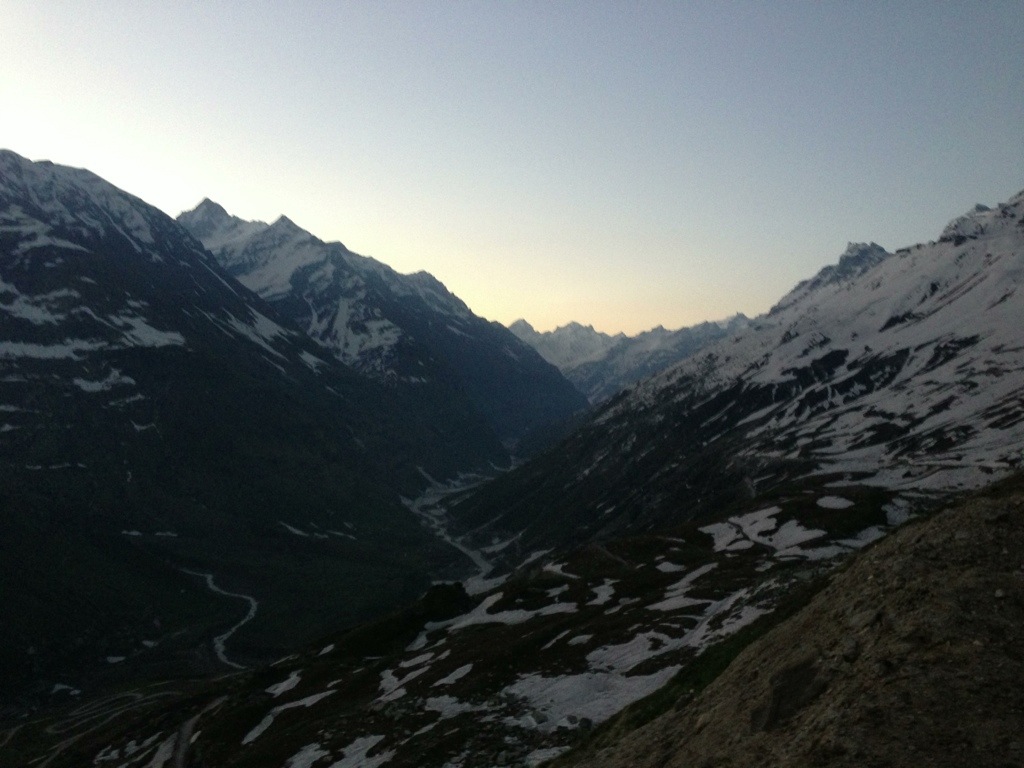
Beyond Manali is the Rohtang pass. Many Indian tourists find their first experience of snow there. It is also the gateway to Ladakh. At 2am one chilly morning I popped my bike on top of a minibus and left for Leh. I had been disappointed by my failure to get there from Srinagar. I was going there after all and cycle back to Manali via one of the most exciting and highest routes in the world. Wow.



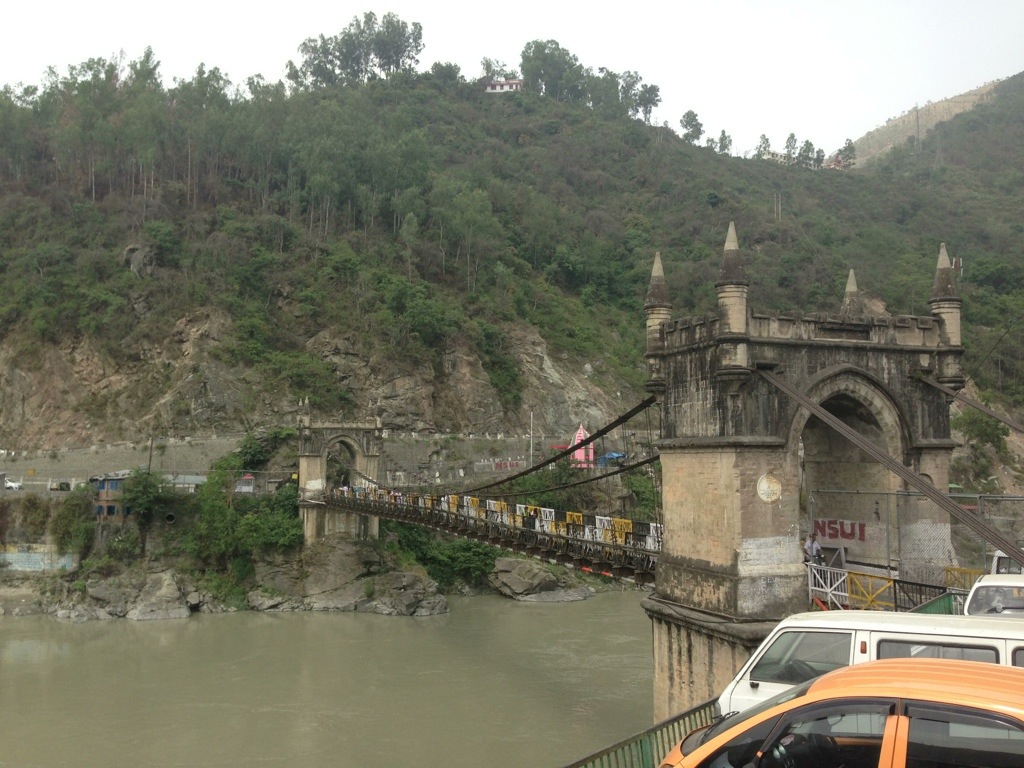
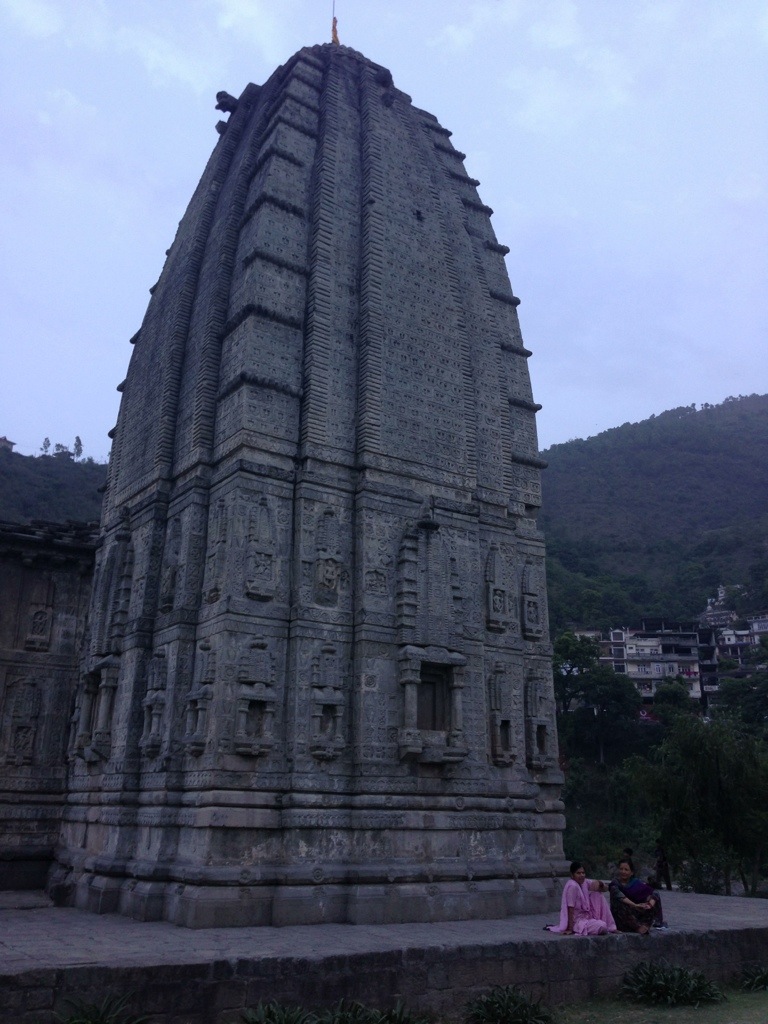
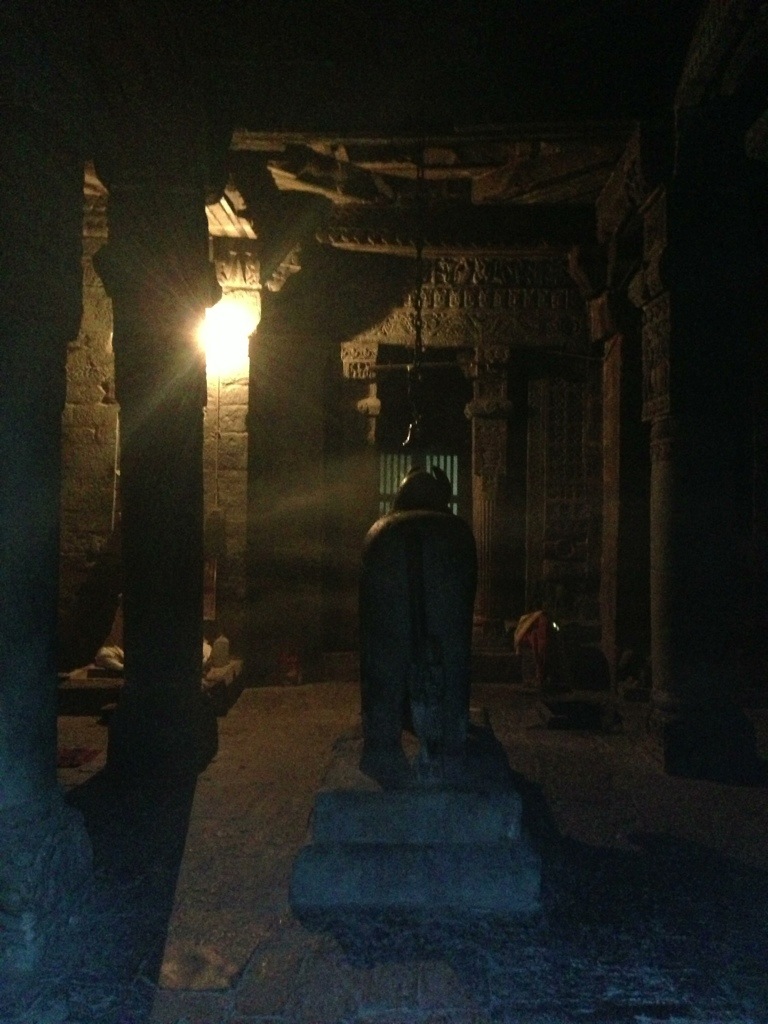
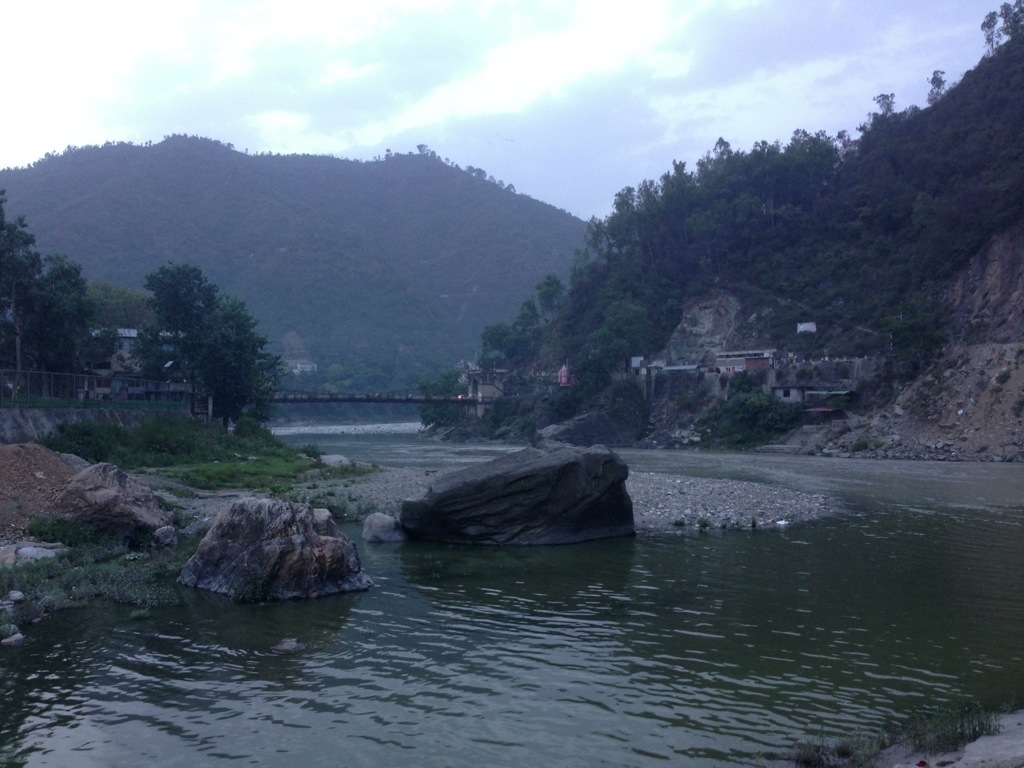


The ride to Mandi was incredible. Once again and after a fair amount of hill work I was treated to a superb run down into the riverside city of Mandi. It was just as well since the temperature was unusually high. Mandi itself is not terribly interesting but a focus for traffic in every direction. The cheap rooms I viewed close to the central sunken garden square were very poor. Having finally viewed one that smelled like the worst kind of public toilet I opted to ‘splurge’ out on the Raj Mahal hotel. It was still time to recover from my traumatic experience at Bir and the secure comforts of the old palace helped assuage my anxiety.
Mandi has many beautiful Hindu temples by the riverside. I took a long walk that took in the island which divides the river and circled the city back to Victoria bridge. I dined like a king in the the old palace hotel and decided to head for the tourist playground of Manali. Time was on my side and I needed to get out of the heat.

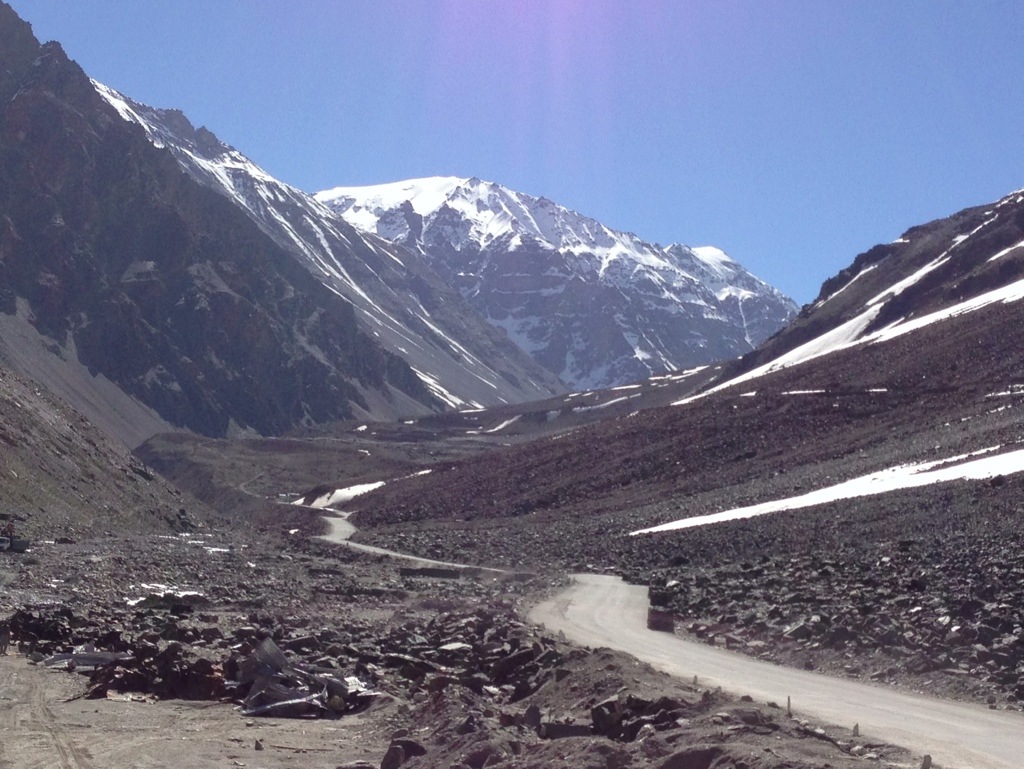
Apologies for the lack of updates but experiencing the usual connectivity problems in Kashmir.
My route has taken me to Manali via Mandi. From there a motorised hop to Leh and the snow capped mountain ranges of Ladakh.
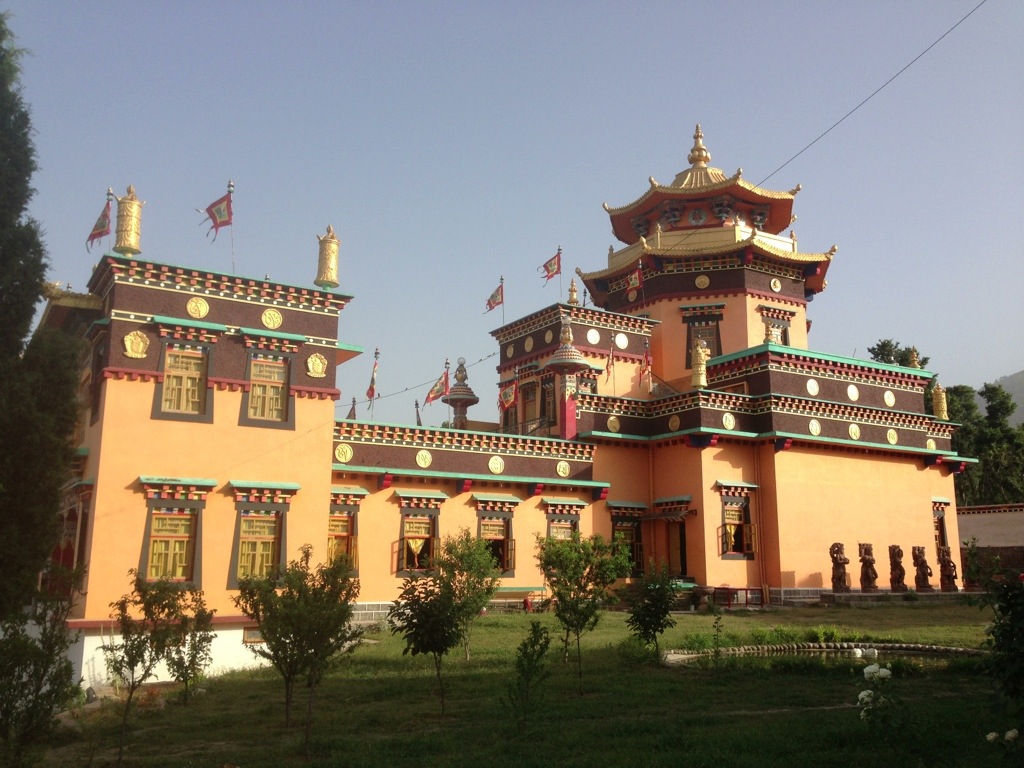

The towns of Bir and Billing provide a destination for paragliders. Every year visitors compete in world championships and enjoy magnificent views as they soar above the Himalayan Dhauladhar mountain range.
Bir is also home to a large Tibetan community which includes several monasteries and a beautiful temple. Strictly speaking it is the village of Chaugin rather than Bir which has become a second home for Tibetan monks and families. The outlying area of Kangra provides good farming land and is characterised by large tea plantations.
I took a short walk around the grounds of the temple, looked in on monks seated in the hall and saw butter lamps being cleaned outside. I then went a little further down the road to the Garden Cafe at Palden house for dinner.


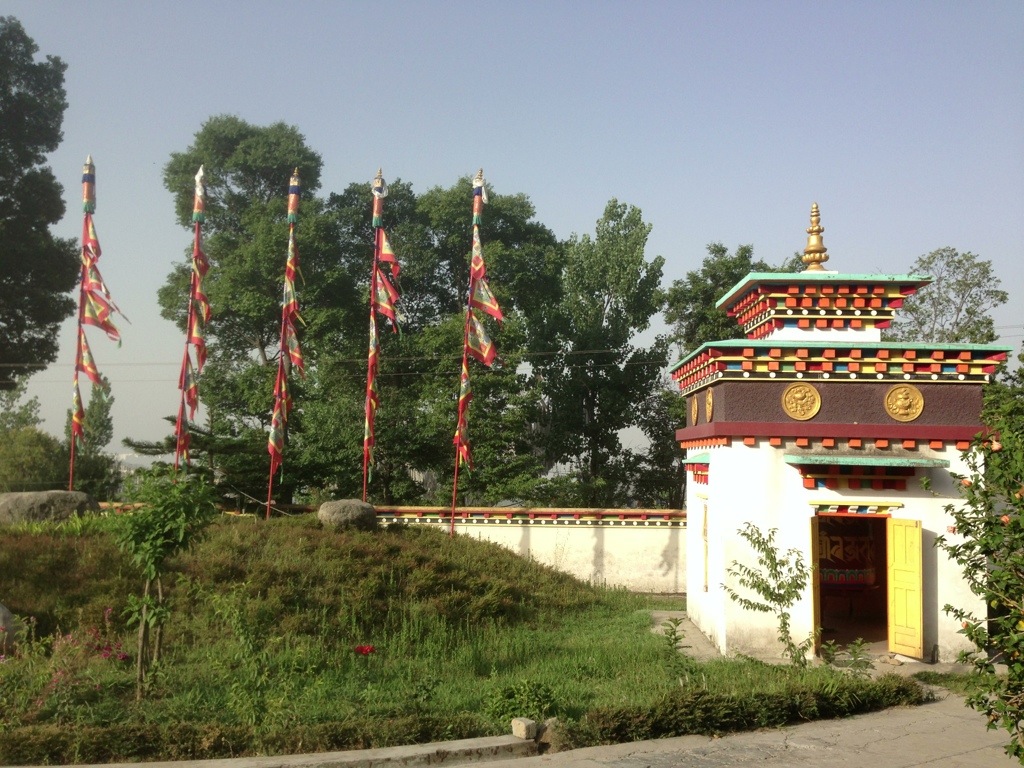
I was struck by the beauty and serenity of Bir and was keen to stay and explore for a few days. I returned to the Garden Cafe the next day having failed to find accommodation. Another visitor to the cafe; Jessinta directed me to an Eco Village (Namlang Himal) nearby. They provide cheap rooms for ‘volunteers’ in a tumbledown flat above a row of shops.
During my two days at Bir I visited a monastery, spent time sitting with metal craftsmen fashioning religious items and enjoyed time chatting with Jessinta who was engaged in a buddhist course at the temple. We tried walking to the American run Dharmalaya buddhist environmentalist centre but realised it was a lot further away than imagined. However it led us across fields and to bump into a retired Aussie/US real estate manager outside his home. He had set himself up in a rented modern building on farmland to live semi permanently and had settled into the ‘good life’. He had become a vegan and practising buddhist. His sour dough rolls and salad were delicious. He was keen to see my bike as he too had a Surly back in Oz. We arranged to all meet at the Garden Cafe for lunch the next day.
The hot weather continued through the next day. Northern India as a whole was experiencing record breaking temperatures. Once again I visited the temple and took a short stroll past fields of tea. After a local takeaway meal with friends at the flat I retired for the night. Sadly a burglar awoke me in the middle of the night and after a flurry of activity he left empty handed. I was somewhat shaken by the violent encounter and packed to leave the next morning. I was offered alternative secure accommodation at the Tibetan run Palden House. An extra two nights there and then I fled Bir. It was not exactly the personal oasis of peace and calm that I had anticipated. I warned local people about the armed intruder and contacted the British Embassy with a view to creating a few red flags. Some local business people including the French owner of the ‘eco village’ were not exactly enamoured with the idea of involving the local police. Appearances are deceptive. Back on the bike into the heat and dust….

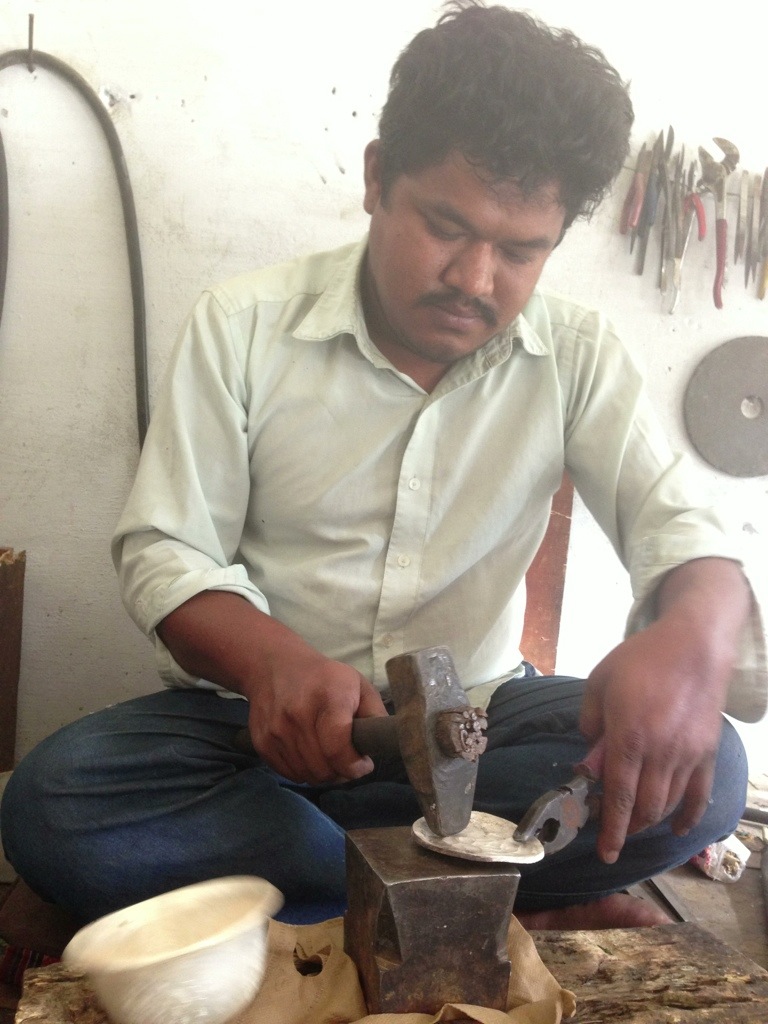


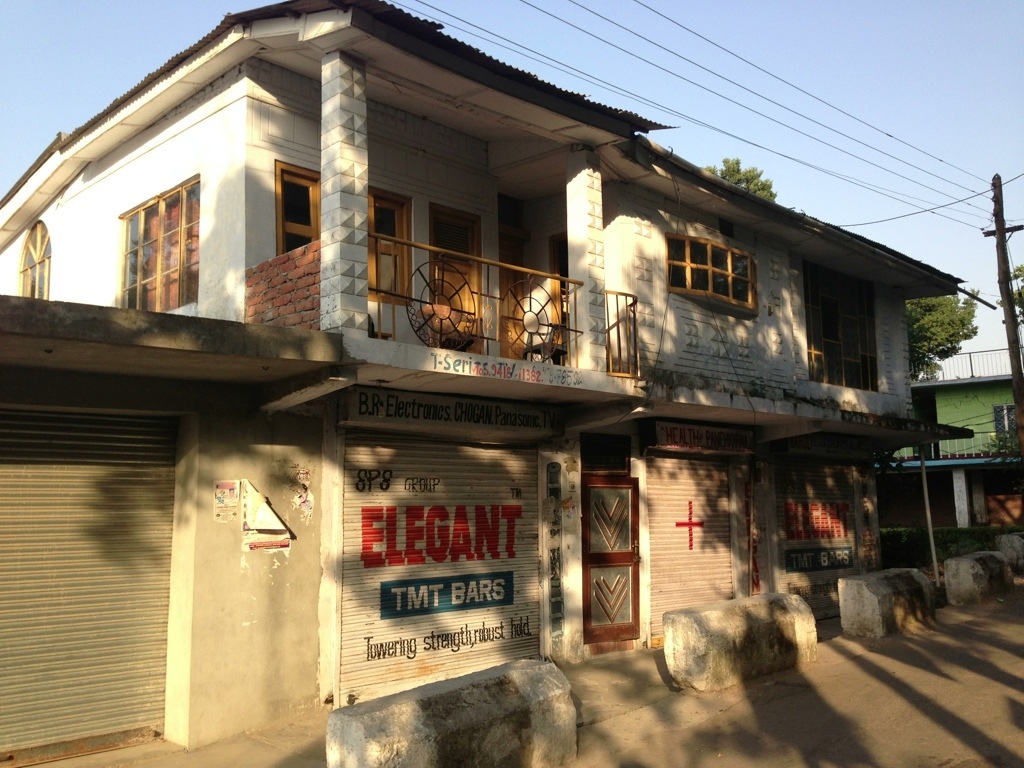
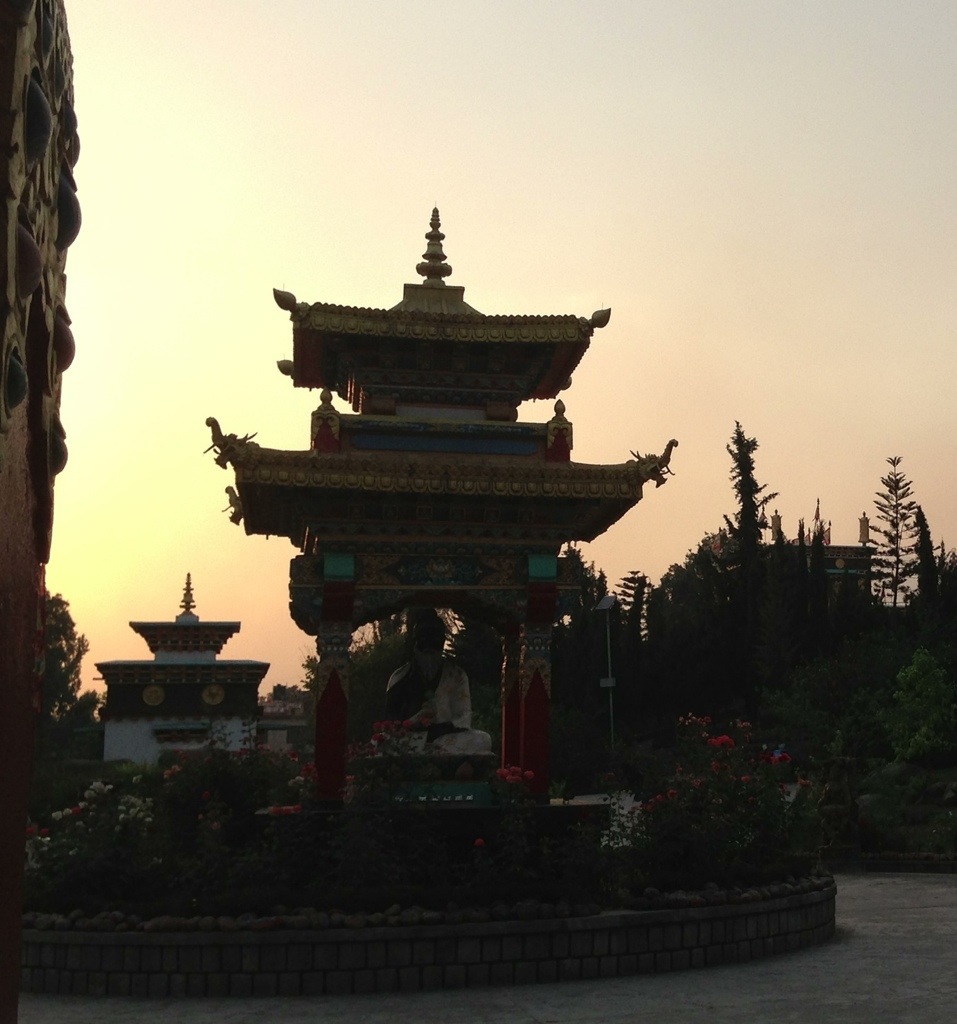
The last few days at McLeod Ganj were good fun. An Italian chap called Stefano had moved into the next room and we hit it off quite well and talked for hours. We visited the Lung Ta Japanese restaurant for lunch and took a short hike to St John’s in the Wilderness church. Stefano is a good photographer and shared some great pictures from his trip. On the Sunday Stefano set off for Amritsar. I packed up and left early the next day. In the process of loading my bike some git (and I think I know who) stole my binoculars. Nice. This happened whilst I was paying my hotel bill. The hotel owner gave me some seeds in a small packet to carry and which he said would protect me from danger on the roads.
It was a bloody hot day. The region was experiencing a record breaking heat wave. I rode down towards the plains and turned onto highway 17 east. The road bobbed up and down through the foothills. Occasionally it was through pine forests but consistently it was hard work up through arid rocky ground. I passed Palampur and then the shrine or mandir at Baijnath. The heat of the day got to me. The temperature was in the 40s. I was well hydrated. No amount of stopping helped. My heart pounded on the slightest exertion and started playing jungle rhythms. I realised that it would no longer be wise to cycle during the main part of the day. By late afternoon I found a scruffy hotel just past the turning to Billing and called it a day.
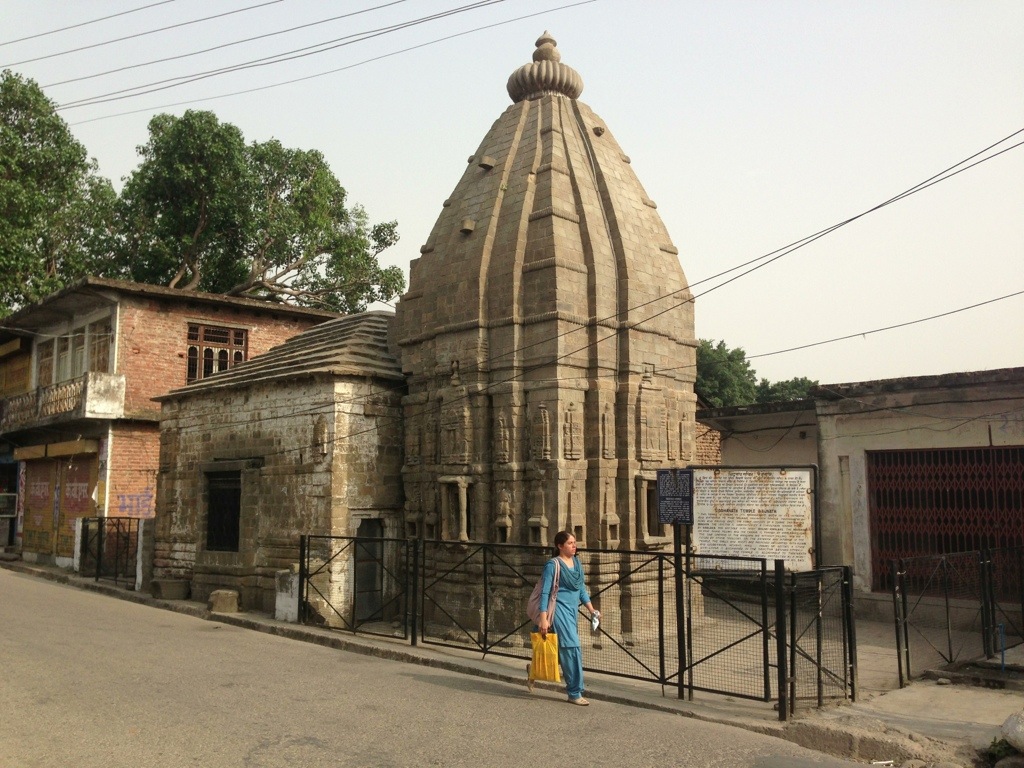
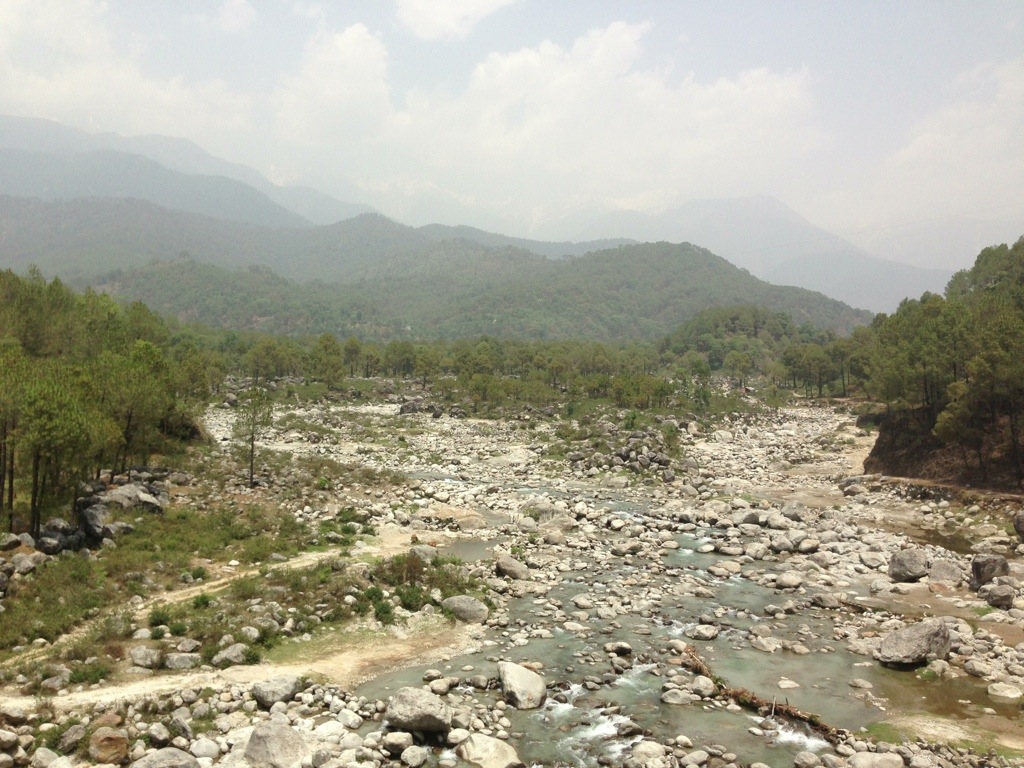
As has happened on so many occasions with main road hotels I was the only guest. The hotel was made from concrete, barely finished and the room was filthy. I recall reading a little about the Tibetan settlement at Bir so I set off uphill to see what that was all about and see if I could get something half decent for dinner.

I took a hike beyond the suburbs and about 9km to Triund. At around 1200m higher than Macleod Ganj it is a good uphill walk over a rocky trail that winds around several hills and through rhododendron forests.
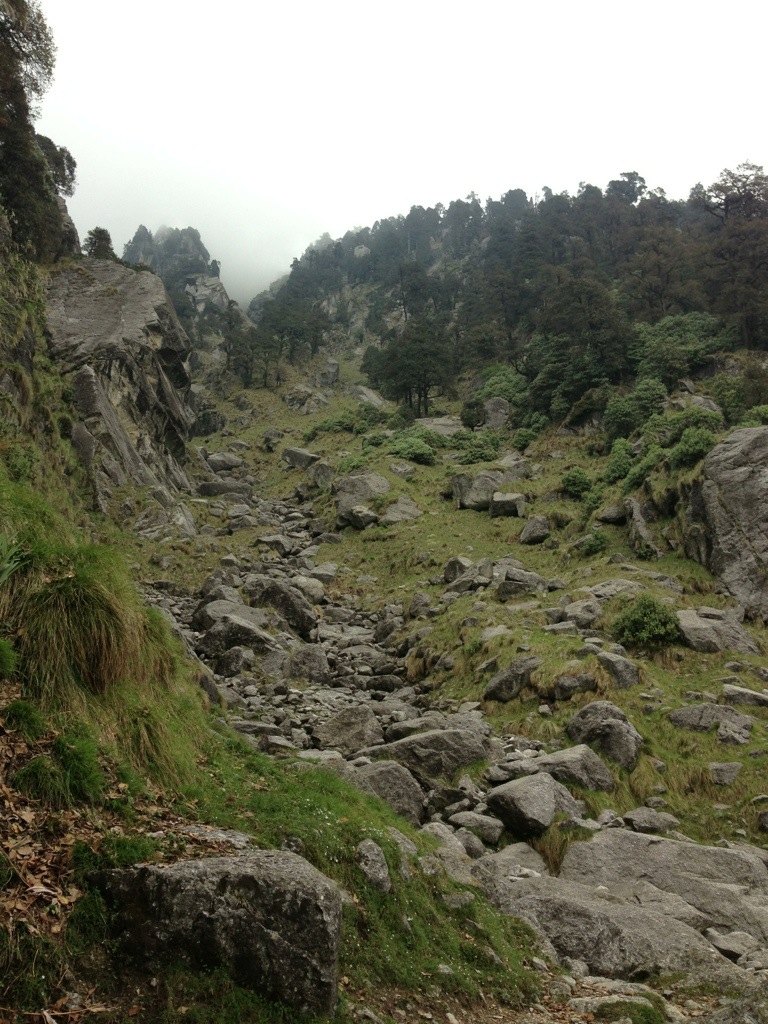
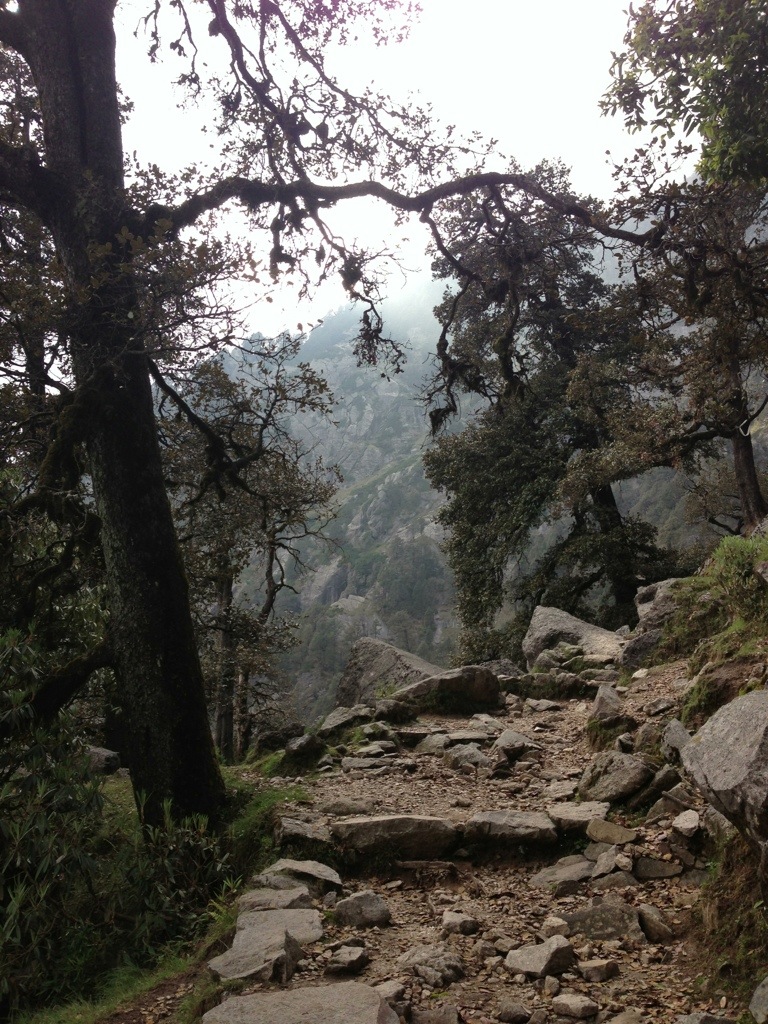


I met a young Cornishman called Ben drinking tea at a cafe on the way up. Together we reached Triund. It is a strip of land covered in grass and large boulders. It extends out towards the Southern plains below and provides awe inspiring views of Dharamsala to the West and part of the snow capped Dhauladhar mountain range to the North.
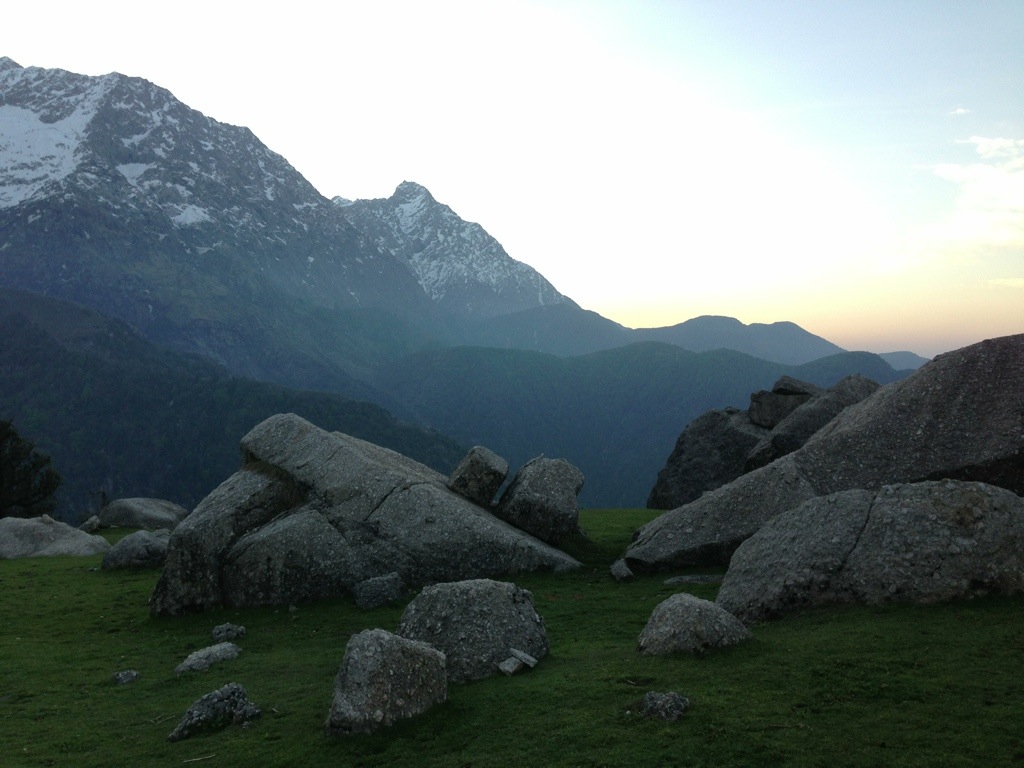

My intention was to trek the 60km to the Inderhara Pass. Ben would have liked to join me but was short of time. The next morning it began to rain quite heavily. I reconsidered my options. I was ill equipped: Insufficient warm clothing, no decent boots or trousers and missing my gortex coat lost with my stolen backpack. It is also a ‘rule’ of trekking that one should not trek alone.
Finally the replacement ‘NorthFace’ backpack I was using was rapidly falling apart at the badly sewn seams. On its first outing in turned out to be piece of crap. I had to sew it back together along the way. I was feeling the cold and took shelter in the lodge provided by the Himachal Pradesh forestry commission. I wrapped myself up in blankets. Sitting on the step and watching the rain I decided I should return to McLeod Ganj. Once the rain had eased I stepped out but instead of taking the path down I was curiously compelled to wander uphill behind the building. I climbed a little higher and found the well marked trail leading North. Painted onto a rock were the words: ‘only one hour to snow line’. Encouraged by this I kept on going until I reached the ‘Snow line cafe’. The mountains looked stunning and towered above me. I continued on and stopped at a river before crossing a small thick glacier. It was an idyllic setting and became the high point of my visit to Dharmsala.
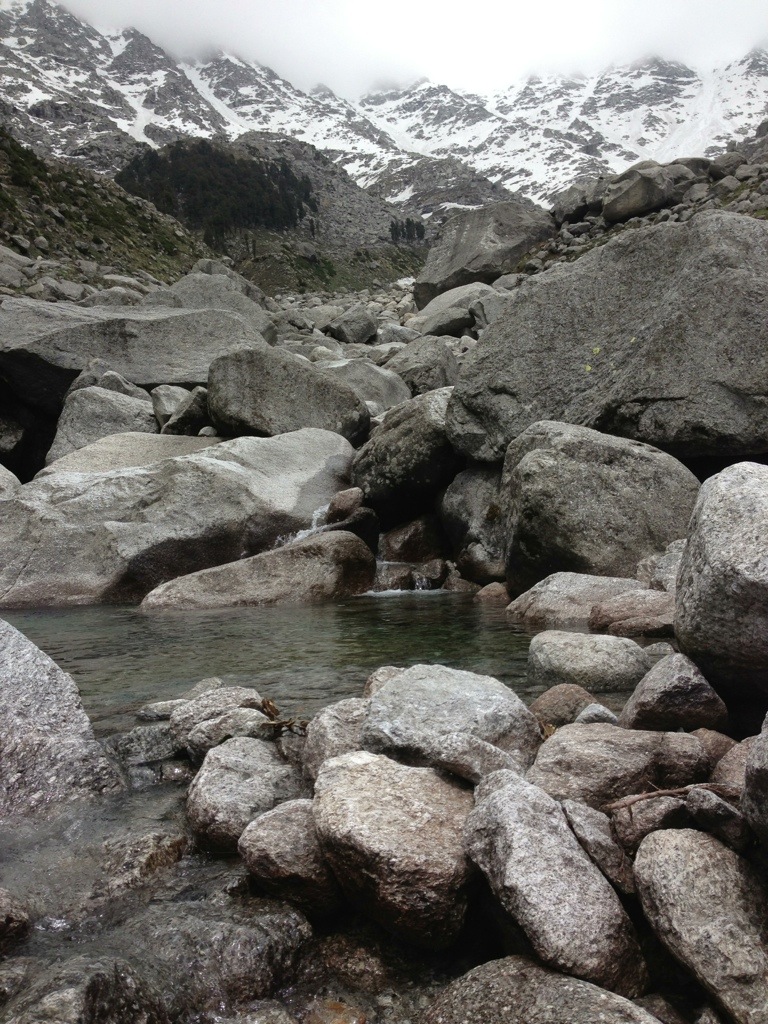


I climbed a little further to @3220metres and reached a small hillside forest decorated with Tibetan prayer flags. I sat for some time and watched a herdsman below leading his herd of goats across the river of thick ice.
I climbed back down and carefully picked my way across the frozen river. I planned to camp again at Triund but once there a chap tried to collar me for an extortionate ‘pitching’ fee. I was not keen to empty my wallet and had just passed so many beautiful places that I could have camped without the expense. I pressed on back down the trail. It was getting late and losing the light. It was a clear starry night. With inadequate space to pitch my tent I slept in my Gortex bivouac on the hillside and at yet another spot marked with a row of fluttering Tibetan prayer flags. The Dhauladher range poked out above the hills behind me and the Kangra valley plain spread out below me like a Google Earth map.
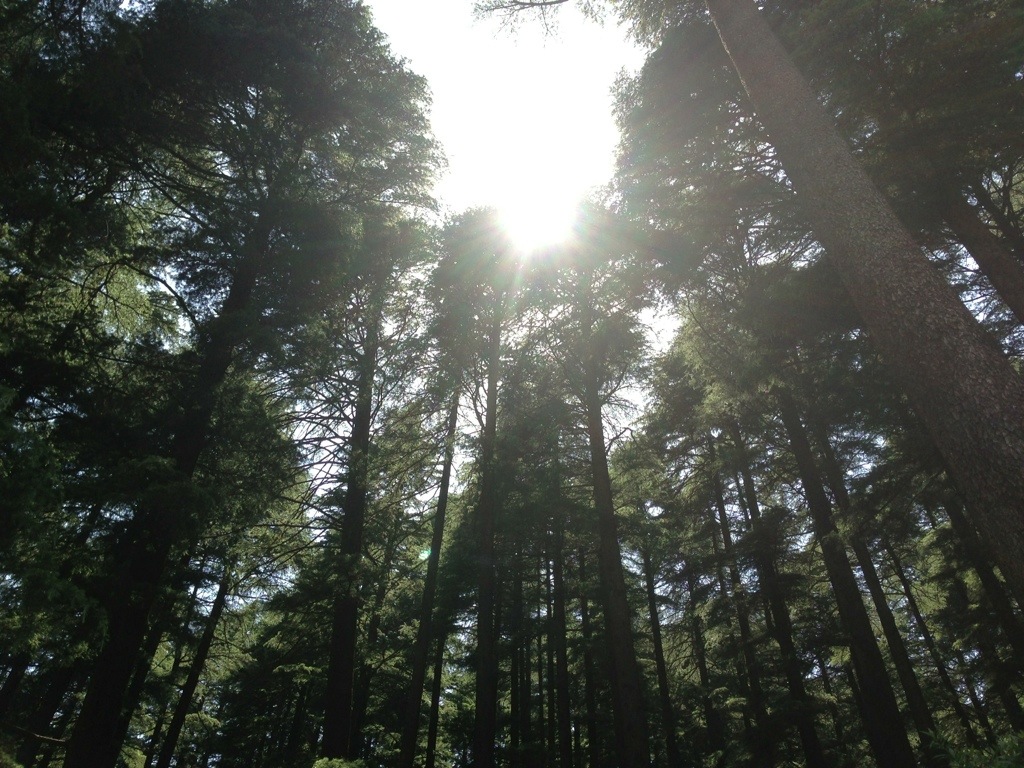
Following breakfast,which I shared with a friendly rook, I made my way back to the suburbs via a trail which led me eventually to the top road and small holdings at upper Dharamkot. From there it was a pleasant walk through the forest and back to McLeod Ganj.


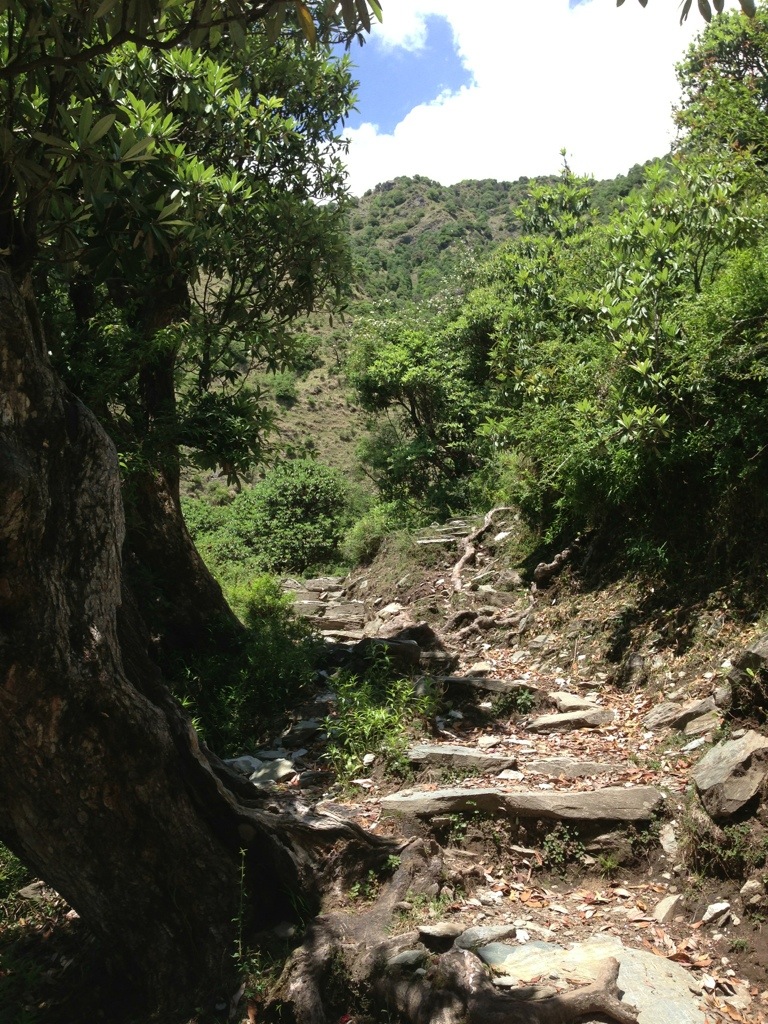
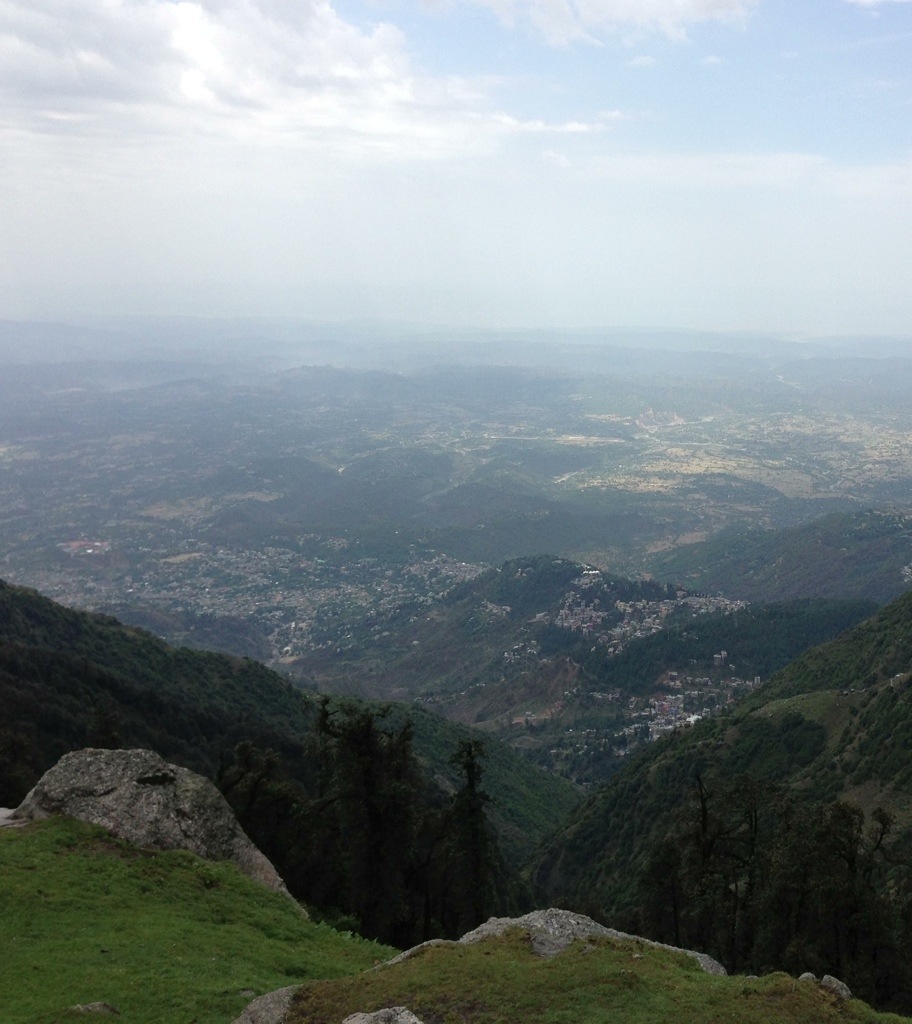
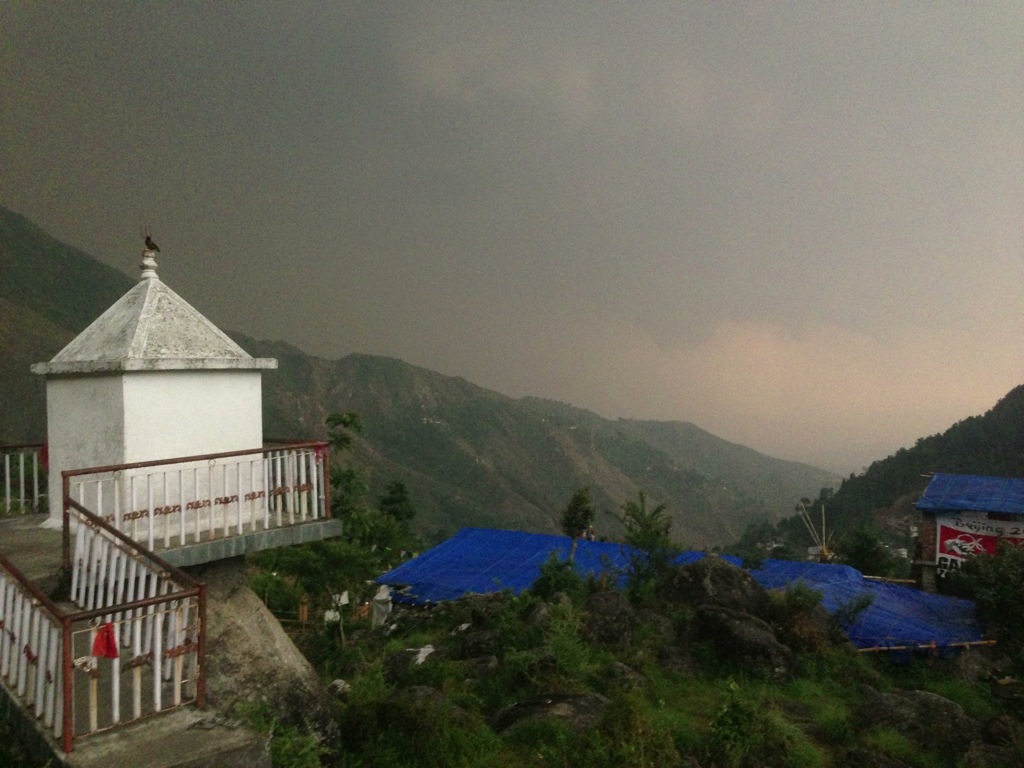
Dharamsala at Kangra consists of several quite different smaller districts: lower Dharamsala, McLeod Ganj, Forsyth Ganj, Dharamkot and Bhagsu. Although all are set closely together around the central forested hill and apex of the Dalai Lama temple they are remarkably unique in character.
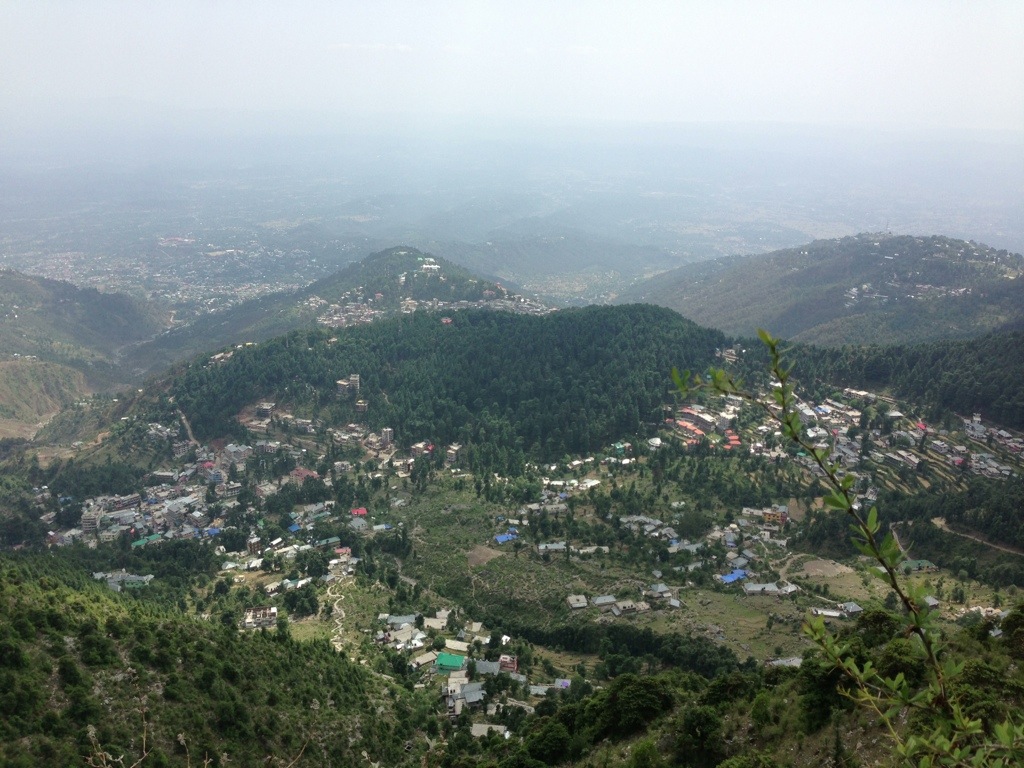
It is a sprawling combination of different ethnic groups, businesses and seasonal visitors. The Tibetan settlement at McLeod Ganj with the associated Buddhist temples and monastery dominates the area. BhagsuNag to the East provides a busy and somewhat congested Indian resort. Visitors are attracted to its waterfall. It has an ancient shrine devoted to Shiva and rebuilt following the devastating earthquake of 1905. To the North is the Judaic settlement of Dharamkot. This leafy suburb is infused with therapeutic centres catering for discerning visitors. The roads and buildings are built to a high standard. The atmosphere reminded me a little of Hampstead village in London. It has many beautifully situated ‘trendy’ restaurants and cafes and retains a certain charm that attracts the more discriminating visitor.
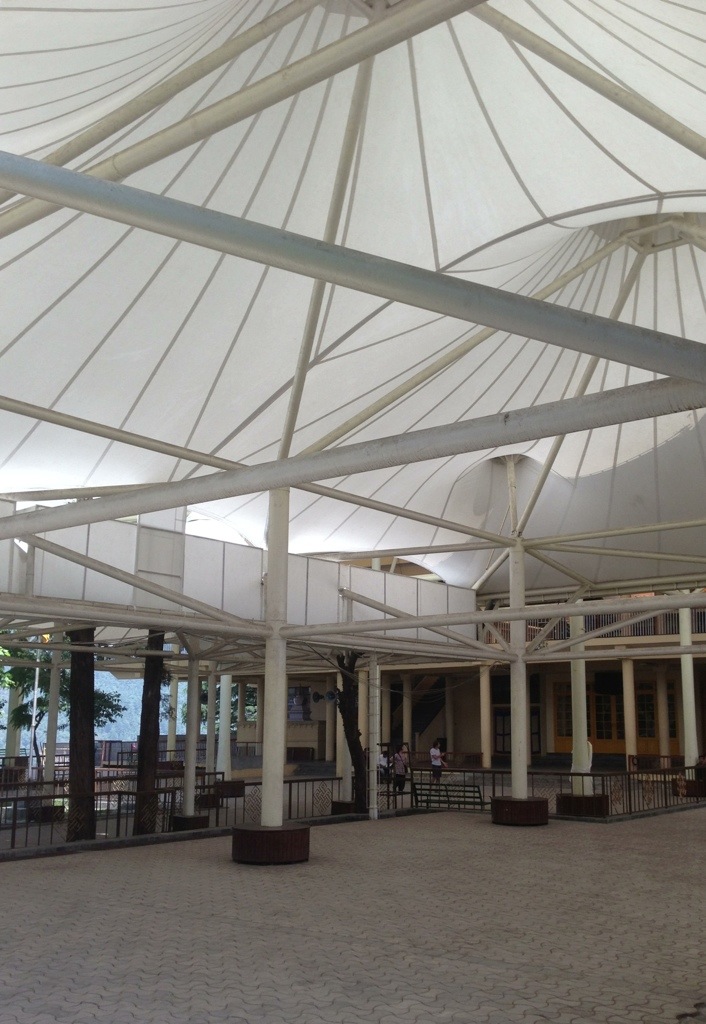
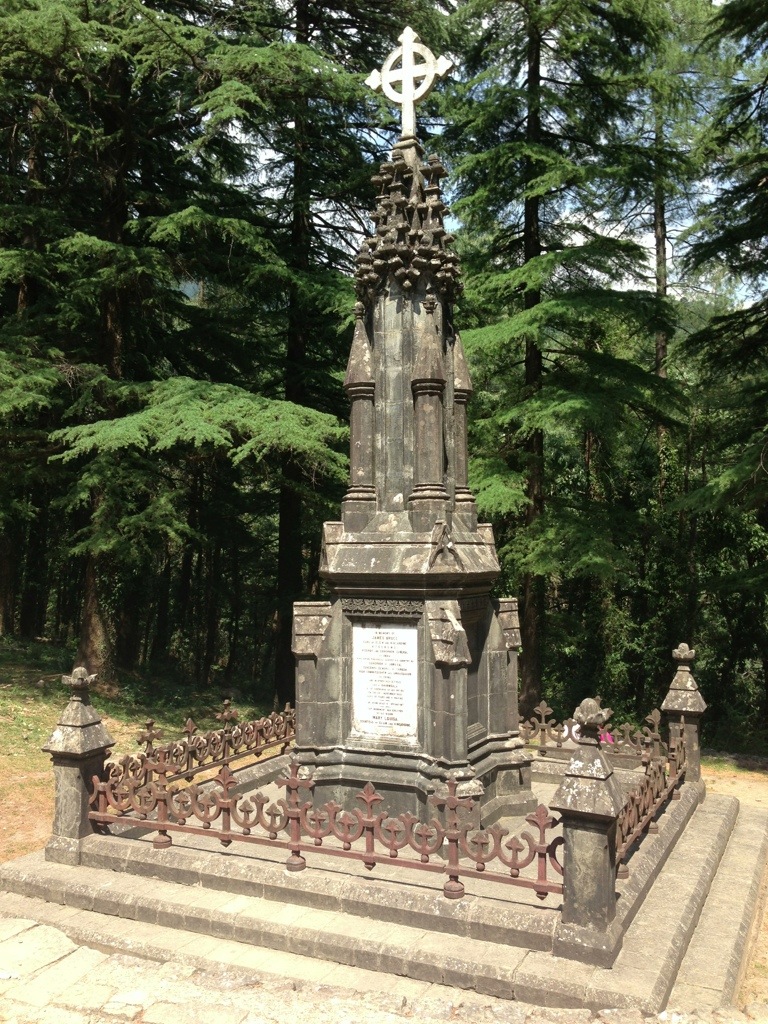
On its West side is the Tibetan centre for performing arts, a meditation centre, forest Stupa and regional centre for mountaineering. Forsyth Ganj lies much further to the West and is connected to McLeod Ganj by a busy main road. Along this road lies St Johns Church with its typically British cemetary and where many servicemen and their families are buried. To the rear of the church is a memorial to Lord Elgin who was Viceroy and Commissioner to India.
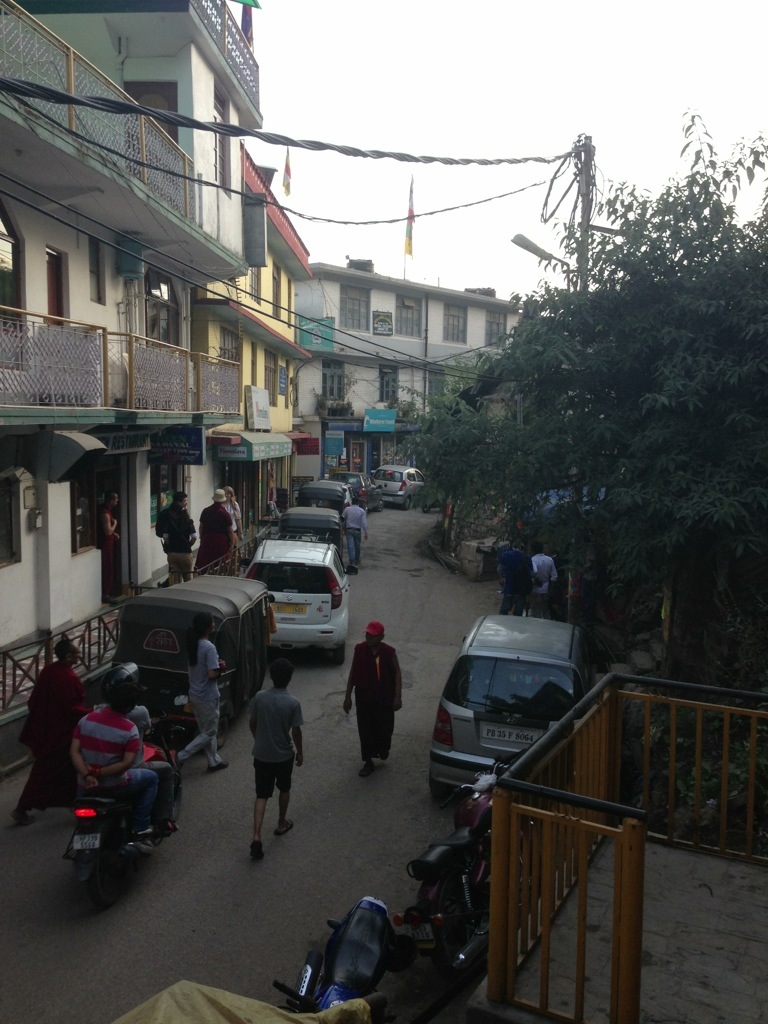
There is, in my mind, a clear division between the areas in terms of ethnicity and reminded me of certain areas of North London where I used to live. The lower area is predominately and typically mainstream Hindu Indian. Beyond this area and some way up the steep hill McLeod Ganj has been transformed by tourism and the Tibetan community into a modern cosmopolitan world. ‘Little Lhasa’ or ‘Dhasa’ represents the Tibetan government and capital in exile with a matching infrastructure and is an important place for Tibetans everywhere. Monks pass through the streets clutching their prayer beads and the latest smart phones. There are a multitude of hotels, restaurants and shops many with an ‘alternative’ and ethnic theme. It is a good place to eat Japanese or Tibetan food, sip herbal teas and align your chakras before enrolling on a course for meditation and yoga. The resort is the perfect destination for ‘new age’ tourists, pseudo-intellectuals, artists and writers. For the hipster sons and daughters of the well heeled it is also a very cool place to relax with other travellers and smoke a little dope. I also get the impression that for some visitors their main spiritual satisfaction is from bottles. There is a constant stream of wealthy international tourists seeking to awaken their spiritual consciousness and improve their health. There is, naturally, a deeply seated resentment by the indigenous Indian population particularly of the Tibetans.
All of these areas are seasonally transformed into the equivalent of a busy city by rampant tourism and is reflected in escalating values. The road traffic is awful and totally at odds with the small narrow streets of a British 19th century hill station. The temperature is pleasant and offers a relief from the burning heat of the Indian summer.
The surrounding terrain offers excellent opportunities for trekking into the mountain ranges to the North. It is also quite the perfect place to enrol in spiritual or therapeutic courses. Many people find work there as teachers or volunteers. There is a real wealth of local services focussing on most areas of healing and health issues. It is big business and prices have risen rapidly in recent years to meet the increasing demand. General shopping is expensive and items often priced higher than their European equivalents. It seems as if items are loaded with a tourist tax. On the up side there is a good availability of foods and products.
Further afield surrounding forests and mountains provide a wonderful and magical refuge from the human jungle. My room provided a comfortable pied a terre at the fulcrum of McLeod Ganj or Dharamsala. However it was noisy (dogs and car horns), dusty and suffered a little from its busy central position. The countryside beyond the inhabited suburbs of Dharamsala provides real peace and serenity and which is, rather sadly, becoming lost from the whole area with the increased traffic and unbridled development.




 Paul's Bike Ride